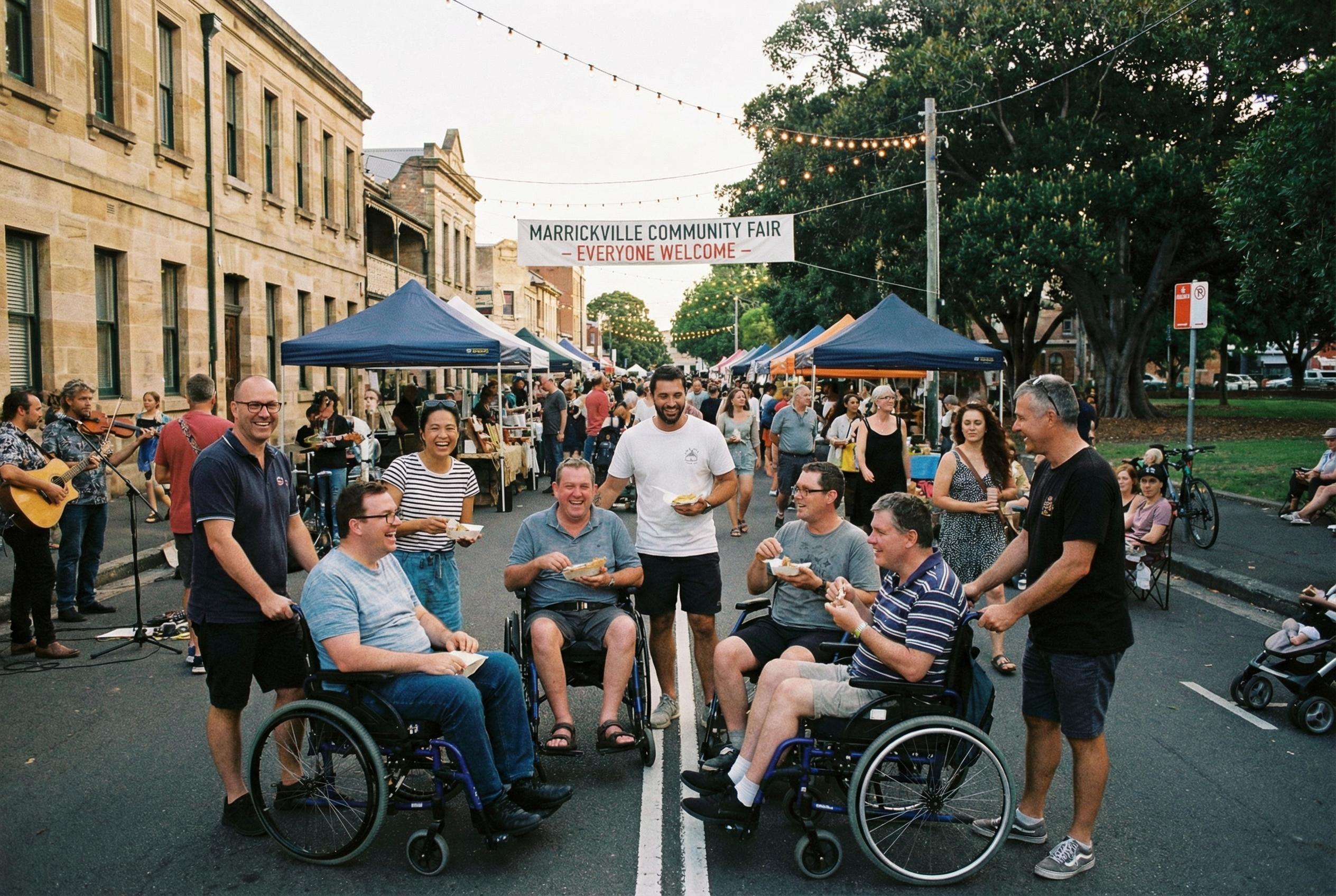
Discovering connection often starts with a hello , and for Tony it began on a camping trip. This piece explores how gay men with disability are finding friendship, visibility and practical support in Sydney’s Inner West, why groups like the Harbour City Bears matter, and simple ways readers can join in.
Essential Takeaways
- Community entry point: Casual encounters can lead to long-term belonging, as Tony found via a Local Harbour City Bears meetup.
- Inclusive spaces: The Inner West offers non-judgemental spots , pubs, parks and events , that feel safer and more welcoming.
- Visible pride matters: Marching in Mardi Gras and attending Pride Fair Day gave Tony a strong sense of identity and visibility.
- Regular social hubs: Quarterly events like Queer Daze and community festivals create dependable chances to meet people.
- Practical benefits: Feeling connected boosted Tony’s independence and confidence, and he’s now looking for local work.
How a chance meeting turned into a chosen family
Sometimes the smallest conversations matter most , Tony met an ally while camping, they mentioned a weekly meet-up at The Bank Hotel, and he began travelling in to join the Harbour City Bears. That initial curiosity turned into routine attendance, which then blossomed into close friendships and a sense of home. According to group listings and event pages, the Harbour City Bears host regular social nights and activities that give people low-pressure ways to connect. If you’re nervous about walking into a new crowd, start by visiting a public meet-up or an event with a mixed crowd; it’s less daunting than a closed social circle.
Why the Inner West feels so accepting , and what that means in practice
Tony describes the Inner West as open-minded, the sort of place where he felt safe to be himself and welcomed without judgement. That’s reflected in the area’s café culture, local markets and community events that actively include queer and disability-friendly programming. For disabled queer people this matters practically: accessible venues, familiar faces and regular gatherings reduce the energy spent “testing the waters” each time you meet someone new. If accessibility is a concern, check venue pages or event listings in advance for mobility info or support options.
Events that create visibility , and why visibility helps
Joining the Mardi Gras Parade with the Harbour City Bears was a turning point for Tony; marching offered a public, joyful assertion of identity. Events like Pride Fair Day and Bear Essentials bring thousands of people together and make space for groups to be seen. Visibility isn’t just symbolic , it helps change others’ assumptions and can open doors to services and friendships. If you want to be visible but nervous, consider volunteering on a stall or walking with a friend; it eases pressure while still being part of the moment.
Regular social anchors: Queer Daze, Inclusion Festival and more
Tony attends Queer Daze every three months and the annual Inclusion Festival, and those recurring fixtures are crucial. Regular events give you predictable chances to meet the same people over time, which helps friendships form naturally. Organised groups also run social activities , from rooftop barbecues and lawn bowls to cruises along the harbour , so there’s something for different tastes and energy levels. Tip: pick one recurring event and commit to it for a few months; familiarity builds trust faster than frantic socialising.
How community improves independence and job prospects
Feeling part of a community changed daily life for Tony: he feels more confident, more independent and is now seeking local work. Social networks can lead to practical help , job leads, local references, or simply the courage to apply for roles close to home. If employment is your goal, use social meet-ups to mention the kind of work you’re after and ask peers for advice. Small conversations often lead to unexpected opportunities.
Quick tips for joining in, safely and comfortably
Start small: attend a public meet-up or daytime market rather than a late-night event. Ask about accessibility before you go: venues often have mobility details online or via organisers. Bring a friend or an ally for moral support the first few times. Volunteer: helping at an event gives structure to interactions and makes introductions easier. Stick with recurring events to build familiarity and real friendships.
It’s a small change that can make every social step feel safer and more rewarding.
Source Reference Map
Story idea inspired by: [1]
Sources by paragraph: