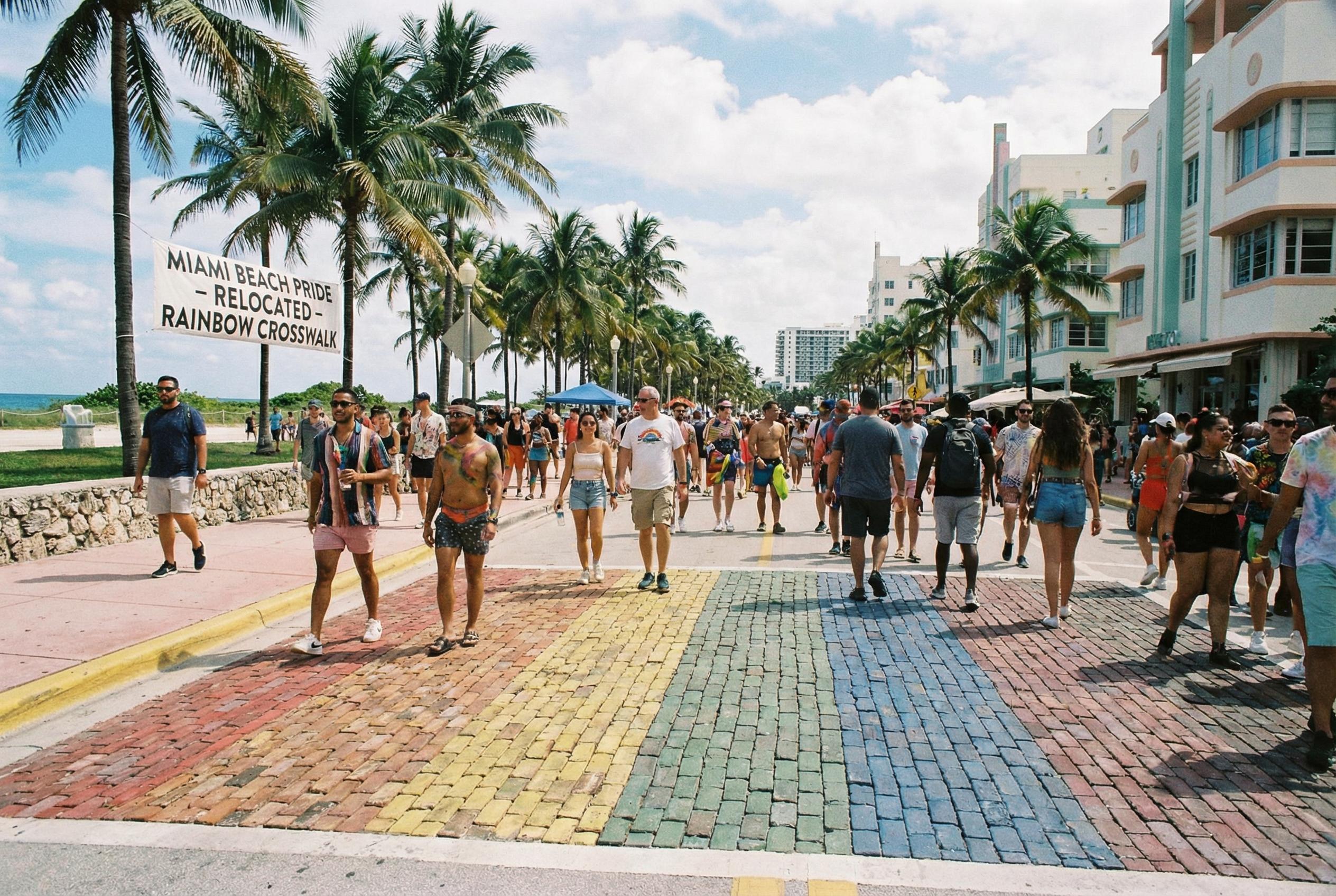
Shoppers and visitors watched as Miami Beach turned an act of erasure into a bright, physical answer , rebuilding the rainbow crosswalk brick by brick inside Lummus Park, steps from its former home, as a lasting Pride installation and a statement against state censorship.
- Bold relocation: The rebuilt rainbow path uses 3,606 original pavers salvaged from the Ocean Drive crosswalk, now installed in Lummus Park where street-art rules don’t apply.
- Community feel: The project was described by commissioners as both defiance and healing , “a moment of strength and pride,” with allies playing a key role.
- Safety and symbolism: Officials point out the original crosswalk was a safe, well-used intersection; its removal was framed locally as political theatre.
- Practical victory: By reassembling the bricks inside park boundaries, Miami Beach sidestepped the state ban on street art while keeping the artwork visible to parade-goers and visitors.
A small pile of bricks, a big public rebuke
The sight of workers fitting tiny rainbow pavers into place is quietly moving, a tactile reversal of last autumn’s demolition. According to local reporting, the city carefully salvaged thousands of bricks from the original Ocean Drive installation and has reconstructed them into a continuous rainbow path in Lummus Park. The colours look brighter for the close-up workmanship, a small, deliberate celebration you can almost hear.
Residents and commissioners framed the project as more than restoration. Miami Beach Commissioner Tonya Katzoff Bhatt told News 10 Miami the new installation turns what some saw as an assault into “strength and pride.” It’s the kind of civic theatre that also doubles as public art, and it’s timed to land just ahead of the city’s Pride parade.
How the city answered a state order with creativity
Last October, crews acting under the Governor’s direction tore up the original Ocean Drive crosswalk, using heavy equipment in a visible show of force that shocked many locals. Coverage at the time documented the sudden removal and the community’s immediate distress. Rather than accept the loss, city leaders and volunteers spent months planning a way to preserve what they could.
By moving the pavers into a park setting, Miami Beach found a legal and symbolic workaround: the state’s prohibition targets street installations, not park-based art. The result is a new, permanent reminder that public symbolism can survive political decisions , and that small, salvaged pieces can be stitched into something that lasts.
Why allies and city officials emphasised solidarity
City commissioners repeatedly credited straight allies and local government colleagues for helping preserve the rainbow legacy. Commissioner Alex Fernandez pointed out to Out South Florida that the crosswalk symbolised decades of struggle , from HIV/AIDS activism to marriage equality , and that allies helped ensure the community wasn’t pushed out of public view.
That alliance is practical as well as symbolic. Local reporting shows the project drew cooperative city resources, planning and publicity so the installation could be completed before Pride weekend. For residents, seeing officials and neighbours unite felt like a reassuring response to what many called a politically motivated erasure.
What this means for public art and future disputes
The relocation sets a small legal and cultural precedent: if state rules limit street murals, cities can still preserve and reinterpret those works in civic spaces. Local10 and city release notes explain the move as both preservation and protest , an artful refusal to let a symbol vanish.
If you’re curious about visiting, the path sits a short walk from the original Ocean Drive site, making it easy to compare the old spot to the new one. For other cities watching, the takeaway is practical: preserve materials, document everything, and think creatively about how to keep public memory intact.
How to experience the installation like a local
Go early to avoid Pride crowds and to appreciate the texture of the bricks up close; you’ll notice chips and wear that tell the crosswalk’s history. Take a moment to read any accompanying plaques or statements , they’ll explain the salvage effort and the meaning behind the colours. And if you photograph it, try a low angle to show the pathway leading back toward Ocean Drive, which makes the installation read like a visual answer to last year’s demolition.
It’s a small, tactile victory that keeps a community’s story in public view.
Source Reference Map
Story idea inspired by: [1]
Sources by paragraph: