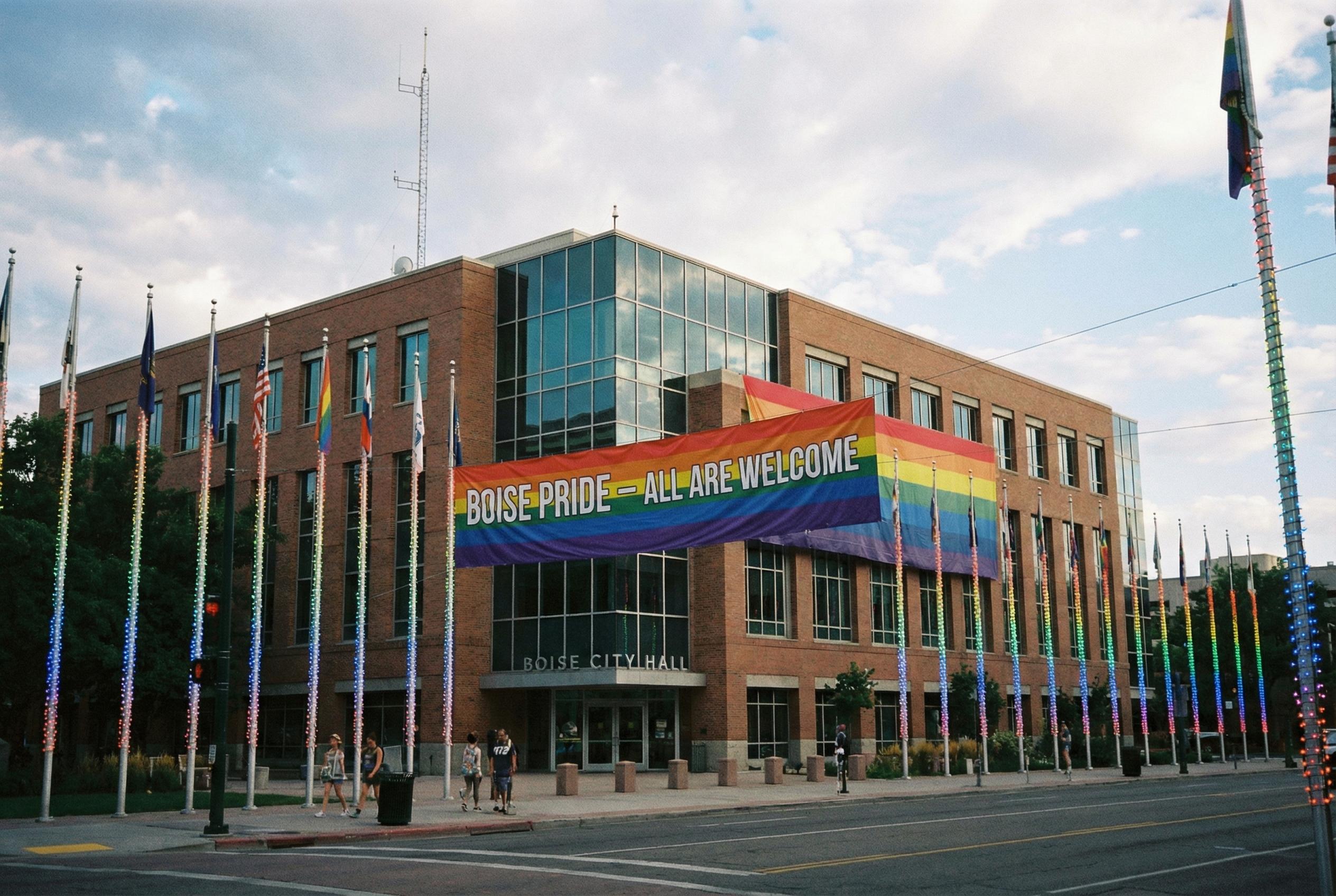
Shoppers and residents are noticing something bright in downtown Boise: instead of Pride flags flying from City Hall, the council has wrapped flagpoles in rainbow colours and unfurled a large “Creating a city for everyone” banner, a visible protest against a new state law and a creative way to keep welcome front and centre.
Essential Takeaways
- Direct response: Boise’s City Council wrapped City Hall flagpoles in LGBTQ+ colours and displayed a large banner after removing Pride flags to comply with state law.
- New law specifics: Idaho’s HB 561 restricts flags on government property to the U.S., Idaho, certain military flags, tribal flags and the Basque flag, with fines of $2,000 a day for violations.
- Local stance: City leaders say their decorations comply with the letter of the law while signalling an inclusive message.
- Tactile details: The poles look bright and intentional up close, and the banner is large enough to be read from the street , an unmistakable visual statement.
- What it means: Municipalities are exploring alternatives to flag displays to express community values without risking fines.
Why Boise’s move matters , bold visuals, quiet defiance
Boise’s decision to wrap flagpoles and hang a welcoming banner reads like a civic wink: colourful, visible and non-flapping. According to local reporting, the city took down Pride flags after Governor Brad Little signed HB 561, then turned to other ways to make its message clear. The wraps and banner don’t violate the new statute in the same way a flying flag would, but they still send a strong emotional signal , bright, inclusive and deliberately public.
This response matters because it shows how cities can adapt. Instead of a legal standoff, Boise created a visual workaround that keeps the city’s values on display while reducing the risk of fines. It’s an example other municipalities are likely watching closely.
The law in plain terms , what HB 561 does and why cities reacted
HB 561 narrows which emblems can be flown on government property to a short list: the U.S. flag, Idaho’s flag, certain official military flags, recognised tribal flags and the Basque flag. The measure also attaches a daily fine of $2,000 for violations. That’s the sort of penalty that shifts the conversation from symbolic protest to fiscal consequence.
City councils and advocacy groups pushed back last year when broader bans started to appear, and Boise’s earlier move , designating the Pride flag as an official city flag , prompted a tighter, follow-up bill. The sequence shows how state and local politics can leapfrog each other, with municipalities testing limits and legislatures responding in turn.
Creative alternatives , banners, wraps and other ways to show support
Boise’s wraps and banner are part of a toolkit other towns might adopt: murals, art installations, sidewalk decals, signage and community events. These options keep an inclusive message visible without technically “flying” a banned flag. They’re tactile, often cheaper than permanent installations, and they can be tailored to the scale of a city’s space and budget.
If you’re advising a local council, consider durability and maintenance , vinyl wraps and large banners stand up to wind and rain differently , and the visual impact from nearby roads. A well-placed banner will read from a distance and feel intentional rather than makeshift.
Legal tightrope , compliance and the risk calculus
City officials in Boise have said their decorations comply with the law. That’s a careful line to walk: public authorities want to avoid the $2,000-a-day fines while still representing constituents. Legal experts and municipal lawyers will likely be parsing whether decorative wraps or fixed signage could ever cross the statutory line, especially if states choose to broaden enforcement.
Expect litigation or clarifying guidance eventually. Meanwhile, many towns will opt for low-risk displays and community programming that express values without testing the law’s exact boundaries.
What residents and visitors can do , practical tips and civic options
If you live in or visit Boise and want to support local inclusion efforts, consider attending public meetings, donating to local LGBTQ+ organisations, or volunteering for community events. For businesses, a rainbow window decal or an inclusive hiring statement can communicate welcome without triggering government flag rules. And if you’re a councillor elsewhere, document your legal advice before experimenting with displays.
Small acts , a banner, a colourful wrap, a community fundraiser , can keep conversation going and make a neighbourhood feel safer.
It’s a small change that keeps a big message visible and lets communities show who they are without breaking the bank or the law.
Source Reference Map
Story idea inspired by: [1]
Sources by paragraph: