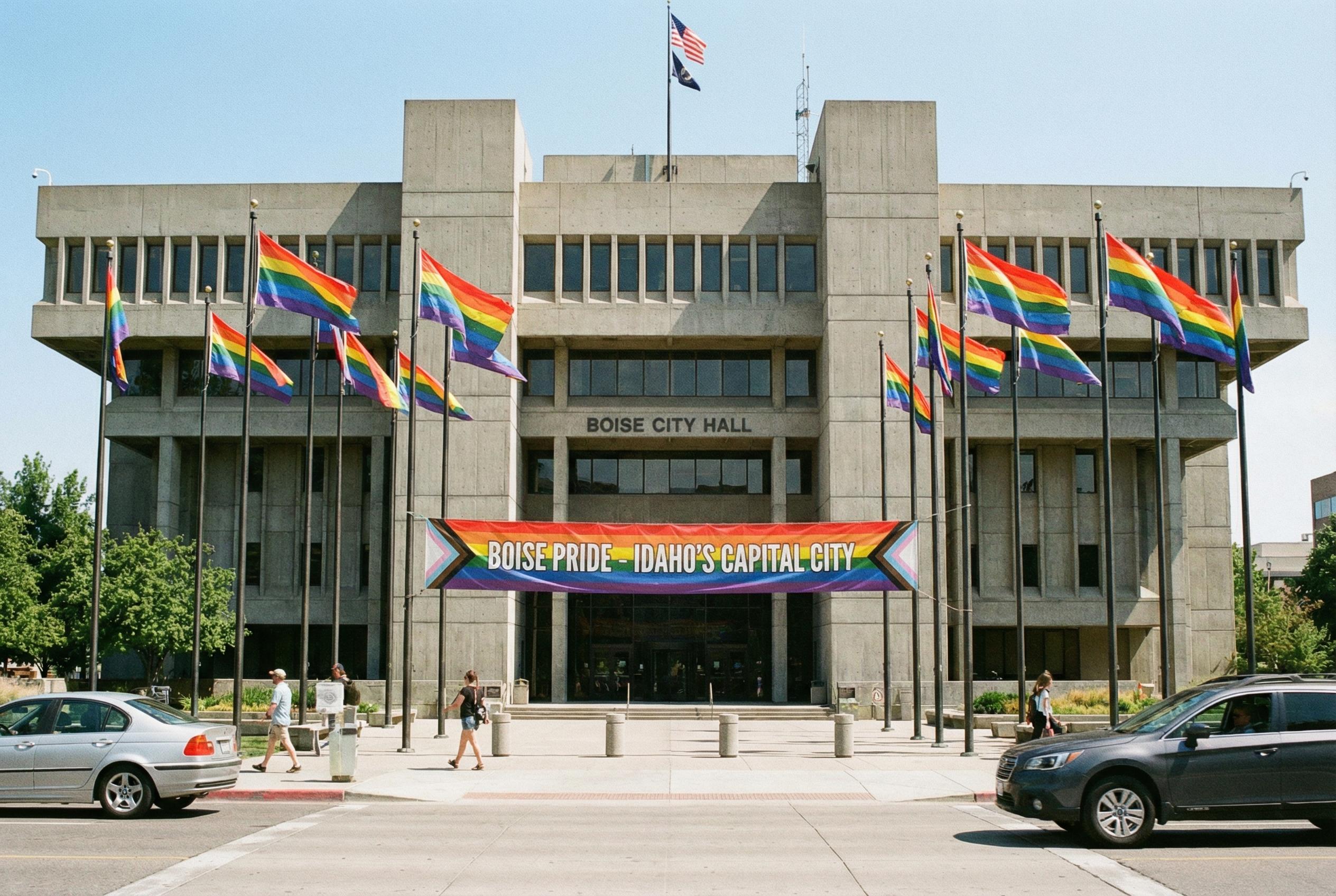
Shoppers, neighbours and city leaders have noticed a bright new pride display at Boise City Hall , rainbow-wrapped flagpoles and a "Creating a city for everyone" window cling , installed after state lawmakers barred Pride flags at government buildings, and it’s stirring practical, legal and civic talk across town.
Essential Takeaways
- New display: Boise City Hall installed rainbow-wrapped flagpoles and a window cling declaring inclusivity, paid from the city's operating budget for about $6,000.
- Law context: The change follows a state law that bans the Pride flag from flying on government buildings, prompting alternative displays instead of a raised flag.
- Legislative reaction: Rep. Ted Hill, sponsor of the "Flag Bill," says the display doesn’t bother him and he does not plan more legislation to address it.
- Local mood: Many residents told reporters they feel seen and appreciated by the city’s move; conversations remain civil but pointed.
- Practical note: The city chose a visual solution that signals support while staying within the letter of the new state law.
Why Boise swapped a Pride flag for colourful poles
Boise’s new display is immediate and visible , you can see the bright ribbons and the cling from the pavement, and it reads like a municipal hug. According to local reporting, the city opted for rainbow wraps around existing flagpoles and a large window cling after a state law prohibited government buildings from flying the Pride flag. The installation cost nearly $6,000 and came from current operating funds, a detail the council shared when asked about public spending.
This approach keeps the message public and tactile without technically flying a separate Pride banner. For residents who want symbols of welcome, it’s a quick, cheerful fix; for critics, it’s a symbolic workaround. Either way, it’s a reminder that civic aesthetics matter, and cities will look for ways to communicate values within changing legal limits.
What the Flag Bill sponsor actually said
When asked how he felt about the display, Representative Ted Hill , who sponsored House Bill 561, colloquially called the "Flag Bill" , sounded surprisingly relaxed. He told a local reporter he’s seen photos and has no intention of introducing new legislation to counter the display. Hill framed his motivation for the law as about reasserting the American flag’s prominence, not targeting people, and when pressed about whether he’s anti-gay he replied he’s not, saying instead that he’s "Pro‑American."
That reaction matters because it undercuts assumptions that the bill’s sponsor will pursue further legal fighting over every municipal response. It also shows the nuance in local politics: lawmakers can back broad measures while tolerating municipal creativity in how they express community values.
How residents are reacting on the ground
People walking past City Hall have been sharing warm, immediate responses; some told reporters they "feel loved" by the new display. The visual cue of colour and the plain language of the cling , "Creating a city for everyone" , read as both invitation and reassurance, especially after a law that forced the removal of the Pride flag. Others see it as a compromise that keeps public property within legal bounds while still signalling inclusion.
Public sentiment is rarely monolithic, and Boise’s streets reflect that. But local accounts suggest the display has succeeded at what neighbourhood branding often aims for: to make ordinary moments , walking to a café or visiting a clerk , feel a little more human and a little less fraught.
Legal tightrope: message without flying a flag
Cities across the country are learning how to navigate recent state-level restrictions on symbolic displays. Boise’s choice to wrap poles and add a window cling is clever precisely because it avoids hoisting a separate flag on the municipal mast while still making a visible statement. That distinction matters under the new law and could be a model for other councils trying to balance expression with compliance.
If you’re a civic leader considering similar moves, think about cost, durability and placement. A cling and wrapped poles are low-cost, easy to install, and reversible; they also invite community feedback without a long legal process. Expect pushback in some quarters, but also support from residents who appreciate the gesture.
What this means going forward
For now, the dialogue around flags, symbols and municipal identity in Boise feels like a civics lesson in real time. The mayor framed the choice as reflecting community spirit, while the sponsor of the state bill signalled no appetite for immediate retaliation. That leaves room for conversation instead of courtroom fights, at least in the short term.
If you care about how your city shows who it is, watch how other councils respond and what voters say next election cycle. Symbols stick, and this colourful, quiet work-around may be one small way communities keep talking.
It's a small change that can make every visit to City Hall feel a little more welcoming.
Source Reference Map
Story idea inspired by: [1]
Sources by paragraph: