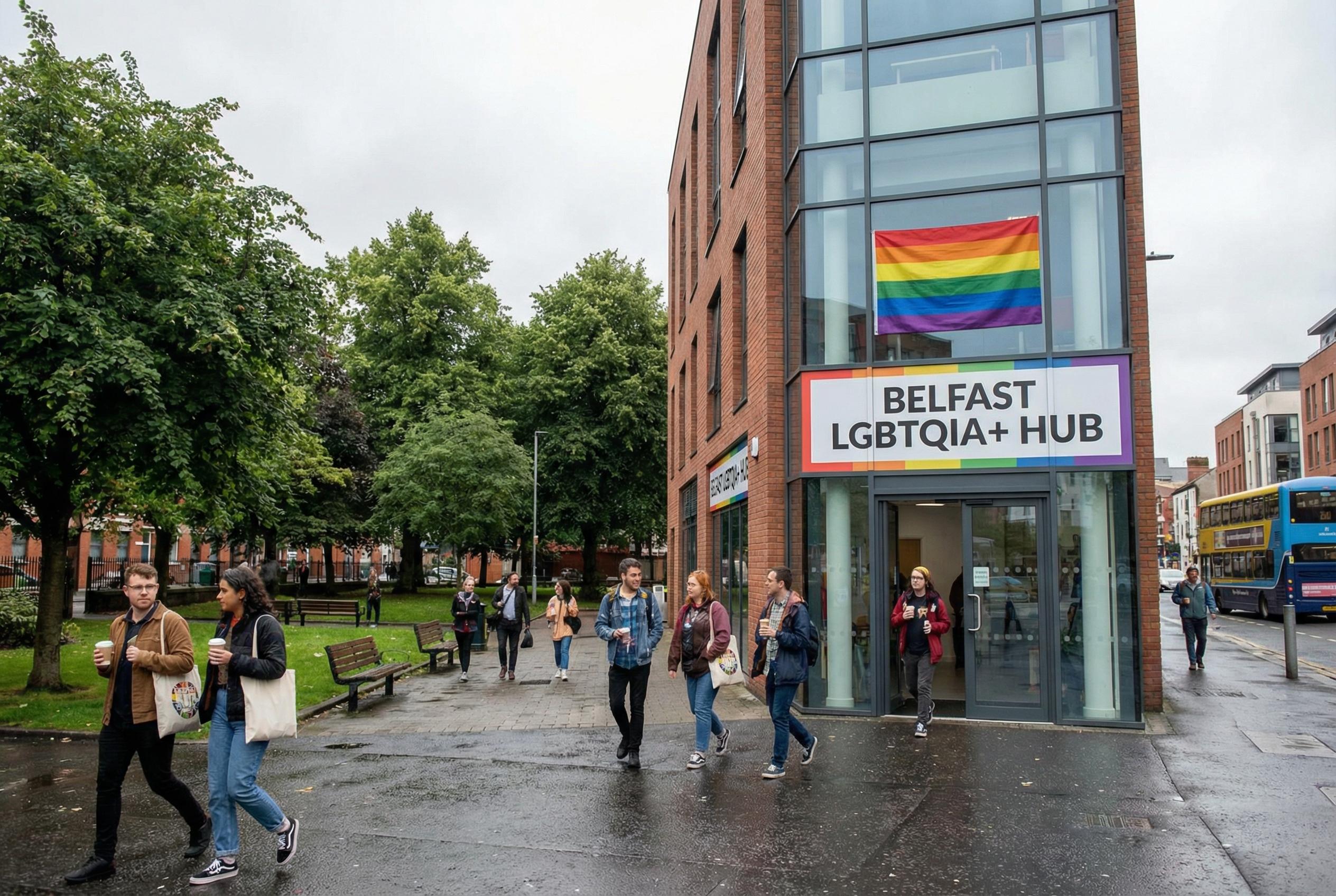
Shoppers are noticing a new community plan in Belfast , the city is opening an LGBTQIA+ Hub on the first floor of 2 Royal Avenue and the council says any ground‑floor tenant must be “compatible” with the hub’s purpose, a detail that’s already stirring debate about inclusion, free speech and community use.
Essential Takeaways
- Location chosen: The new hub will be on the first floor of 2 Royal Avenue, a council‑owned building being promoted for community use.
- Compatibility clause: Belfast City Council says organisations occupying the ground floor must be “compatible and complementary” with the hub’s aims.
- Local reaction: The wording has prompted questions from councillors, free‑speech advocates and some community members about fairness and legal risk.
- Practical note: The council is inviting expressions of interest for the building’s use; community groups can apply but should expect selection criteria tied to the hub’s purpose.
What the plan actually is , and where the phrase “compatible” shows up
The council has been clear about the headline: 2 Royal Avenue is being set up as a community resource that will host an LGBTQIA+ Hub on the first floor. That detail matters because it shapes how the rest of the building might be used, and it’s the phrase “compatible and complementary” attached to potential ground‑floor users that has turned a property decision into a public debate. The wording feels practical , the council wants harmonious tenants , but for some it reads like a test of values rather than logistics.
Why the wording has stirred free‑speech concerns
Some commentators and local activists have framed the requirement as a risk to open debate, arguing that stipulating compatibility could exclude groups or voices that are critical of parts of LGBT policy. According to local reporting, councillors and opinion writers have flagged this as a potential limitation on who can use a civic space. Others say the clause simply protects the hub’s safe‑space function. Either way, the line between protecting a community group and narrowing civic conversation is what’s being questioned.
How councils usually balance community safety and open access
Public bodies often set use conditions for council properties to ensure activities align with the venue’s purpose , for instance, youth centres and women’s refuges commonly apply safeguarding‑led restrictions. Belfast City Council has run public calls for expressions of interest for 2 Royal Avenue, which is the normal way to select tenants. That process lets the council weigh practicalities , opening hours, insurance, security , alongside ethos. The trick is to be transparent about criteria so decisions don’t look arbitrary.
What this means for community groups thinking of applying
If you’re a voluntary group considering a space at 2 Royal Avenue, expect to explain how your activities will fit with an LGBTQIA+ Hub upstairs. Be ready with clear safeguarding policies, inclusivity statements and examples of how your events won’t undermine the hub’s purpose. It’s sensible to ask the council for the scoring or selection matrix early on , that keeps things tidy and gives applicants a fair shot.
The wider context: politics, identity and civic property
This local planning decision lands amid a bigger cultural moment. Debates about gender identity, rights and public policy are active across the UK and Ireland, and national voices are shaping local perceptions. When public buildings host identity‑based services, questions about who feels welcome , and who gets to use the space , rise quickly. That’s both predictable and manageable, if the council commits to clear rules and open communication.
It's a small, practical choice about a building that has become a barometer for wider debates, so watch how the council sets out its selection criteria , it will tell you a lot about what “community” means in practice.
Source Reference Map
Story idea inspired by: [1]
Sources by paragraph: