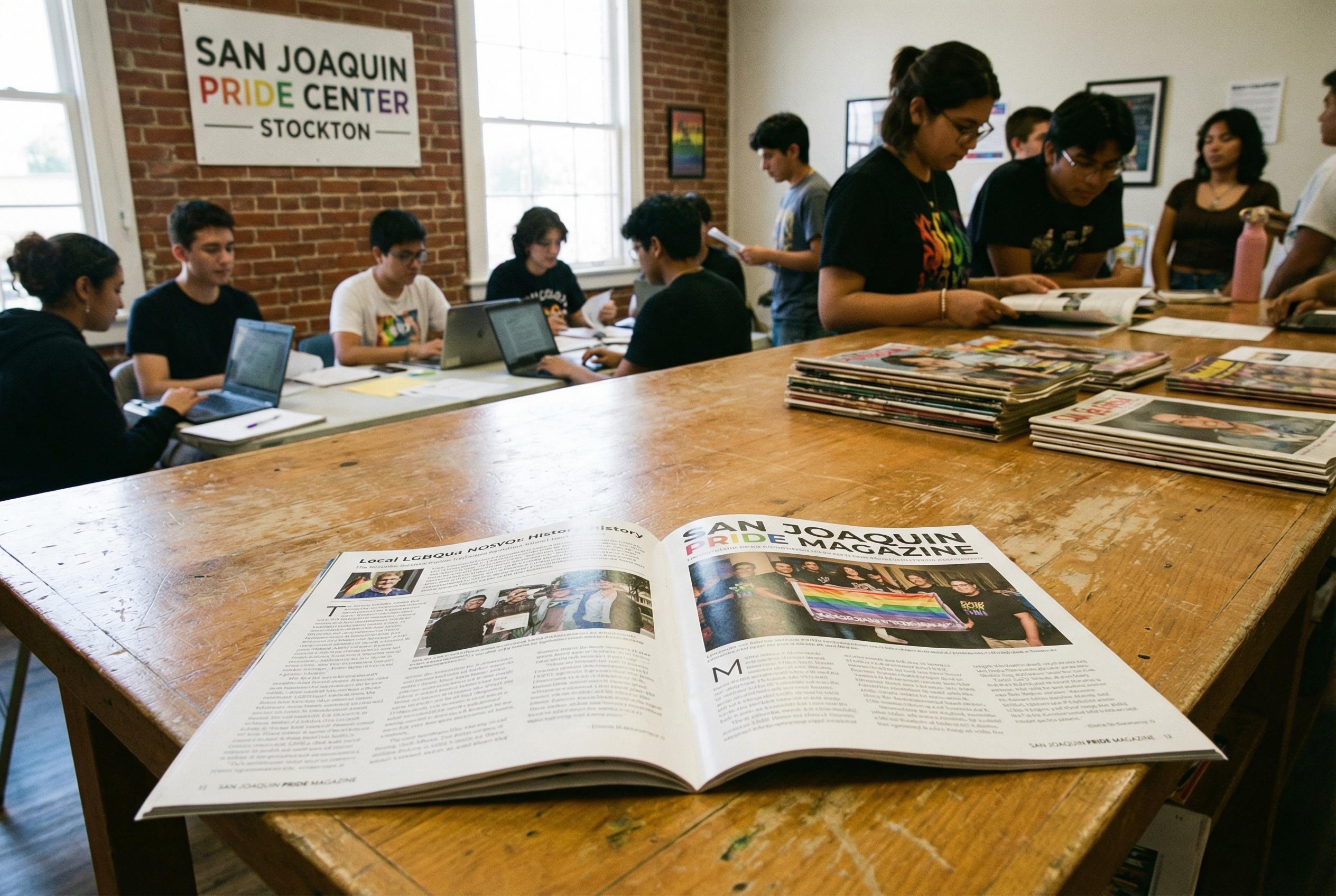
Shoppers of culture are spotting something brighter in Stockton , a youth-led zine pushing queer visibility. The Rainbow Youth Alliance at the San Joaquin Pride Center launched the fourth edition of Let Me Be Perfectly Queer in March, offering art, journals and real talk for ages 12–25, and it matters for community, safety and self‑expression.
Essential Takeaways
- Youth-run: The zine is produced by the Rainbow Youth Alliance, a teen and young-adult group connected to the San Joaquin Pride Center.
- Open submissions: Anyone aged 12–25 in the community can contribute; meetings are held virtually each Monday evening.
- Mixed formats: Each issue blends essays, artwork, interactive trackers, colouring pages and a glossary of LGBTQ+ terms, with a helpful fluidity disclaimer.
- Support network: The Pride Center supplies broader resources , counselling, events and training , that back the zine’s outreach and safety.
- Accessible: Let Me Be Perfectly Queer is available digitally and in print at the San Joaquin Pride Center, making it easy to share and keep.
A teen voice that feels like a room you can breathe in
The strongest thing about Let Me Be Perfectly Queer is its candid, lived‑in tone , it sounds like conversations you’d have with friends, not lecture halls. Contributors describe finding a “third space” away from home and school where emotions can be expressed without performance. That quiet relief, the soft lift when you finally say something out loud, is what makes these pages matter.
The zine grew out of Rainbow Youth Alliance meetings at the San Joaquin Pride Center, which already offers wraparound services from counselling to community events. So this project isn’t just creative play; it’s rooted in a support network that understands young people need both practical help and expressive outlets.
If you’re picking an issue up, expect pieces that are equal parts messy and wise, with interactive sections that invite you to colour, track moods or journal. It’s a format that meets readers where they are , tactile, bright and usable.
How the Pride Center helps the zine do more than look good
The San Joaquin Pride Center provides the infrastructure that keeps the zine visible and safe. Beyond printing copies for distribution, the centre runs trainings, events and youth outreach, creating a pipeline for contributors and readers alike. That kind of backing matters , it turns a DIY project into a sustainable community resource.
According to the centre’s materials, they welcome community participation and offer avenues for youth to engage both online and in person. That accessibility reduces barriers for teens who might otherwise be isolated or fearful about showing up in public spaces.
For anyone thinking of starting something similar, partnering with an established local centre is a smart move: you get meeting space, promotional reach and, crucially, a framework for safety and confidentiality.
Glossaries, disclaimers and the work of inclusive language
Each zine includes a glossary of LGBTQ+ terms and a short disclaimer noting that definitions can be fluid. That’s small but significant: it signals humility and learning rather than gatekeeping. Contributors and coordinators stress inclusive language and representation, and readers pick up on that effort.
Language matters in teen spaces because words can validate or exclude in an instant. Including a glossary and a nod to fluidity teaches contributors to be careful and curious, not prescriptive. If you’re submitting a piece, consider how your language lands for readers with different experiences and ages.
Creativity as therapy , contributors’ reflections
Creators describe the act of making a spread as almost meditative; one contributor said they reached a “flow state” while working, another talked about the confidence the group gives them to express themselves. Those reactions underline something obvious but worth repeating: creative practice is a practical mental‑health tool.
The project also helps build social skills. People learn to collaborate on layouts, offer feedback and help design each other’s spreads. That cooperative dynamic translates into friendships and peer support that last beyond the printed page.
If you’re a parent or guardian, encouraging a teen to join isn’t only about art , it’s about connecting them to a network that offers peer mentorship and emotional safety.
How to join, submit or support the zine
Meetings for the Rainbow Youth Alliance happen every Monday evening from 5:30 to 6:30pm virtually, and submissions are open to anyone aged 12–25 in the wider community. For details, Youth Outreach Coordinator Diana Sandoval can be reached via email for sign‑up and submission guidelines.
Copies of the latest issue are available both online and in print at the San Joaquin Pride Center, making it easy to share with schools, libraries or youth groups. If you’re local and want to support, consider volunteering, donating materials or simply spreading the word , small gestures help these projects thrive.
It’s a small change that can make every young queer voice a little easier to hear.
Source Reference Map
Story idea inspired by: [1]
Sources by paragraph: