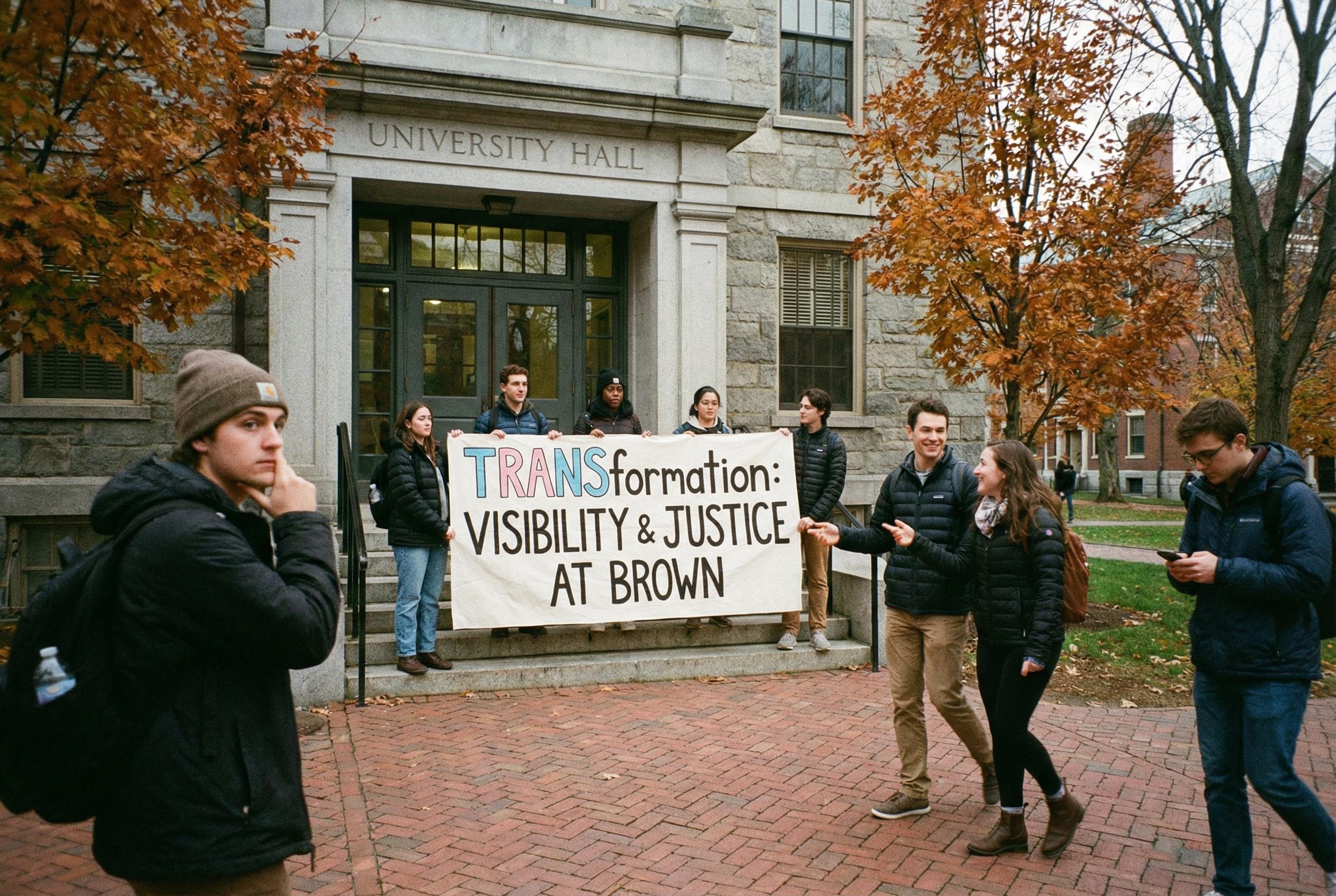
Shouting back matters: students at Brown have formed TRANSformation and held a visible protest in front of the John D. Rockefeller Jr. Library, pushing back against a wave of anti-trans laws at home and abroad and arguing that campus organising can make a real difference.
Essential Takeaways
- New group on campus: TRANSformation launched to create community for transgender students and to organise advocacy on campus.
- Visible protest: Roughly 40 students and community members rallied to condemn recent anti-trans proposals and laws.
- National context: Organisers pointed to hundreds of anti-LGBTQ bills introduced in 2025 as part of a coordinated legislative trend.
- Global solidarity: The group is also campaigning against changes to India’s transgender law and circulating a petition to oppose the amendment.
- Community tone: Speakers blended resistance with joy and practical aims , connecting people, offering support, and pushing for policy change.
Why a small rally felt so significant
The crowd might have been modest in size, but the mood was unmistakable: clear voices, bright signs and a sense of care rather than mere anger. A few dozen students gathered on a crisp afternoon to make visible what organisers say is often pushed into the margins , trans existence and resilience. The sensory detail mattered; speakers’ words carried across the library steps and passedersby paused to listen, nod and snap photos. This kind of on-campus presence can turn an abstract policy debate into human faces and stories, which organisers hoped would shift conversations beyond legislators’ talking points.
How TRANSformation came together , and what it wants
TRANSformation launched around the International Transgender Day of Visibility and its founders say the group grew from a felt need: many trans students reported a lack of community at Brown and beyond. Organisers describe the group as both a social hub and a political platform , a place to connect, share resources and channel energy into campaigns, like opposing local bills that affect student access to sports and healthcare. They’re straightforward about scope: build solidarity, support young trans people, and pressure decision-makers who craft laws that touch everyday life.
The bigger picture: hundreds of bills and a coordinated trend
Speakers at the rally named the scale of the problem , many hundreds of anti-LGBTQ bills were introduced in 2025 , framing the campus action as part of a national wave of restrictive measures. According to civil liberties groups, this legislative momentum has included proposals limiting school sports participation, restricting access to gender-affirming care and changing identity documentation rules. That wider context helps explain why students felt compelled to act locally: when laws target youth and education, campuses naturally become frontline spaces for defence and debate.
Connecting local action to global struggles
Organisers didn’t just focus on U.S. statehouses. They said solidarity must cross borders, noting recent amendments in India that would remove legal recognition for transgender people and prompting TRANSformation to circulate a petition opposing the change. One speaker read a message from an international student who feared speaking publicly, illustrating how legal shifts overseas reverberate in the lives of students here. When campus groups link local protests with global campaigns, they widen allies and signal that rights rollbacks are a worldwide concern, not simply a domestic policy debate.
Practical ways students and allies can help now
If you want to support trans students or get involved, organisers offered sensible, immediate steps: join campus groups like TRANSformation, attend rallies and meetings, volunteer for petition drives, and show up at town-hall events where state bills are discussed. For those unsure what to say, simple solidarity matters , listen to trans peers, amplify their stories, and back policies that protect access to healthcare and participation in sports. Small acts , hosting a study group, sharing verified resources, or adding a name to a petition , accumulate into meaningful protection and visibility.
It's a small, steady refusal to be silenced , and a reminder that local organising still moves the needle.
Source Reference Map
Story idea inspired by: [1]
Sources by paragraph: