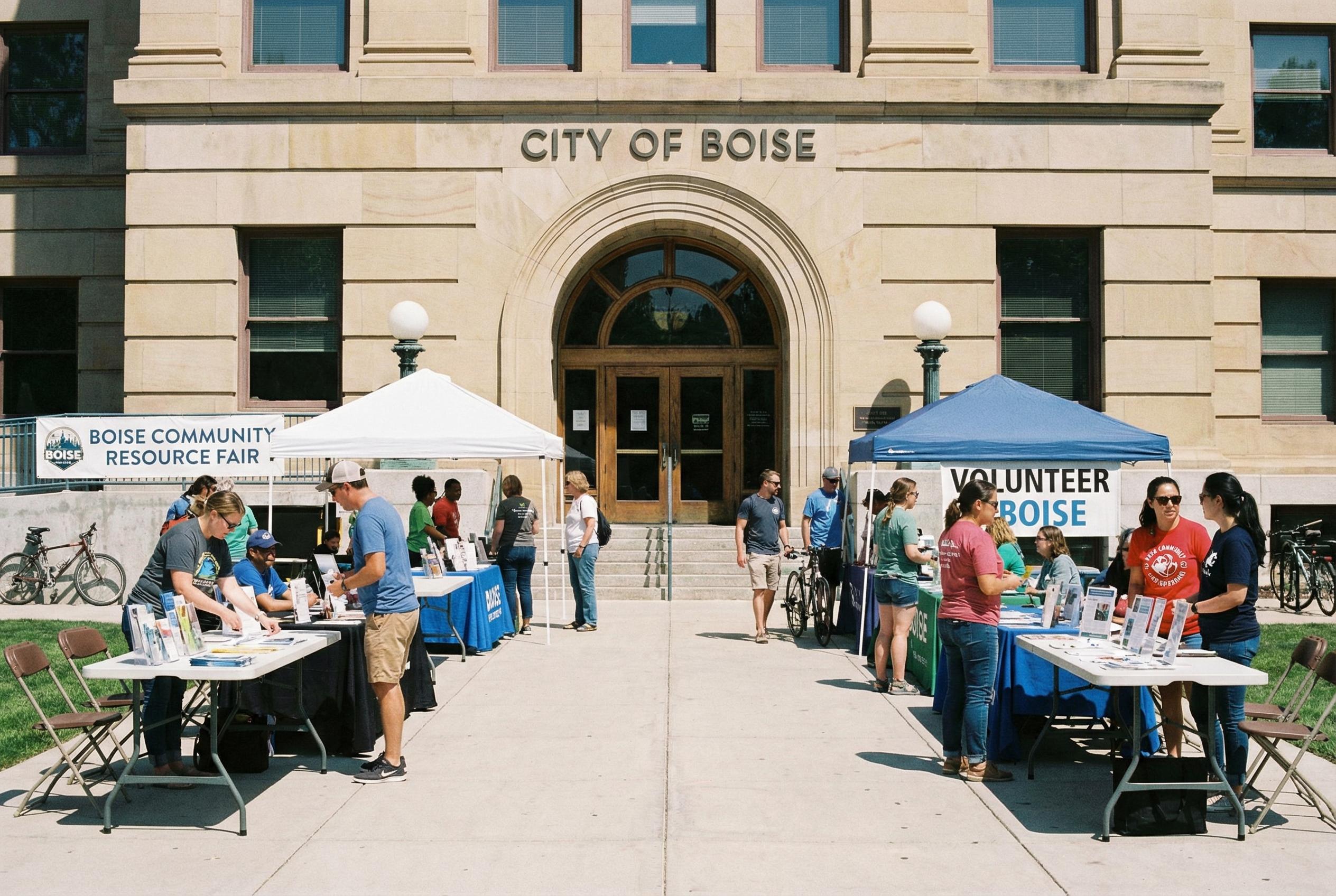
Shoppers and neighbours are turning up to a lively resource fair at Boise City Hall, where local groups are offering services, solidarity and practical help just days after new state laws around bathrooms and flags were signed , and why that visibility matters now.
- Local turnout: Community groups and residents gathered in a bright, conversational space at Boise City Hall to share information, services and solidarity.
- Free, practical help: Organisations like Trans Affirm provided free transition-wear, on-the-spot sizing and safety guidance, making support tangible and immediate.
- Civic support visible: City leaders, including Boise City Council member Jimmy Hallyburton, attended to show municipal backing and reassurance.
- Context matters: The fair occurred days after the Idaho Statehouse approved laws limiting bathroom access and restricting certain flags, increasing community interest and urgency.
- Atmosphere: The event felt warm and resolute , people chatted, exchanged resources and left with practical items and a stronger sense they’re not alone.
A timely show of support, packed with practical items
The strongest impression from the fair was its mix of warmth and work , tables laden with pamphlets, care items and clothing, and conversations that felt both ordinary and necessary. According to local reporting, volunteers handed out everything from information leaflets to transition-wear, and many attendees lingered to ask questions and swap contacts. It’s the kind of grassroots scene where you can feel relief in the room; people left with tangible help and a quieter confidence.
Events like this weren’t organised in a vacuum. Organisers say the fair had been planned for some time, but timing gave it sharper meaning. With new legislation moving through the Statehouse that touches bathroom access and what flags may be flown on public buildings, community members were watching closely, and the fair became an immediate place to respond, reassure and equip people.
Why free transition-wear and on-the-spot sizing matter
Practical support was the headline for many tables. One group, Trans Affirm, offered a transition-wear programme that’s entirely free and includes in-the-moment sizing and safety advice. That kind of service removes two big barriers: cost and uncertainty. For someone early in transition, being able to try items on with help and walk away with clothing that fits can be a small but vital affirmation.
From a broader perspective, these tangible services often matter more than a statement. They’re the day-to-day support that can help someone navigate schooling, work or healthcare while laws and rhetoric shift around them. If you’re looking to help locally, donating gently used items or volunteering for fitting sessions is a straightforward way to make a difference.
City hall presence: elected officials showing they’re listening
Elected officials attended the fair, and their presence mattered. Boise City Council member Jimmy Hallyburton spoke directly to the crowd, framing attendance as an act of protection and welcome. When city leaders turn up, it sends a message that municipal spaces are intended to be safe and inclusive.
This kind of civic backing doesn’t override state-level policy, of course, but it does shape daily experience. Local government can adopt policies, offer partnerships and create services that offset some of the strain residents feel. For anyone anxious about where to turn, a conversation with a friendly council member or a local office can be surprisingly reassuring.
How this event fits into wider policy debates
The fair took place in the immediate aftermath of bills signed at the Idaho Statehouse: measures that limit bathroom access and restrict which flags can be flown on government buildings. Those changes have increased the spotlight on grassroots support networks, and organisers acknowledged that reality. The timing made the resource fair a visible counterpoint , a place where community-building and practical help met public policy headlines.
For readers watching similar debates elsewhere, this is a reminder: when legislation raises barriers, communities often respond with mutual aid and visibility. It’s useful to track both the legal changes and the local infrastructure that helps people cope and thrive.
How to find and support similar events near you
If this kind of local resource fair resonates, here’s how to get involved: check community calendars at city websites and local LGBTQ+ centres, follow groups like Trans Affirm on social channels, and drop by city hall events. Bring donations of gently used clothing, offer skills like sewing or fitting, or simply volunteer to staff a table , small acts add up quickly.
And if you’re attending, consider practical questions: what sizes or items you can donate, whether transport or childcare will be needed, and how to connect people to ongoing services after the event. Community resilience grows when gestures are coordinated and consistent.
It's a small change that can make every visit, every outfit and every conversation feel safer.
Source Reference Map
Story idea inspired by: [1]
Sources by paragraph: