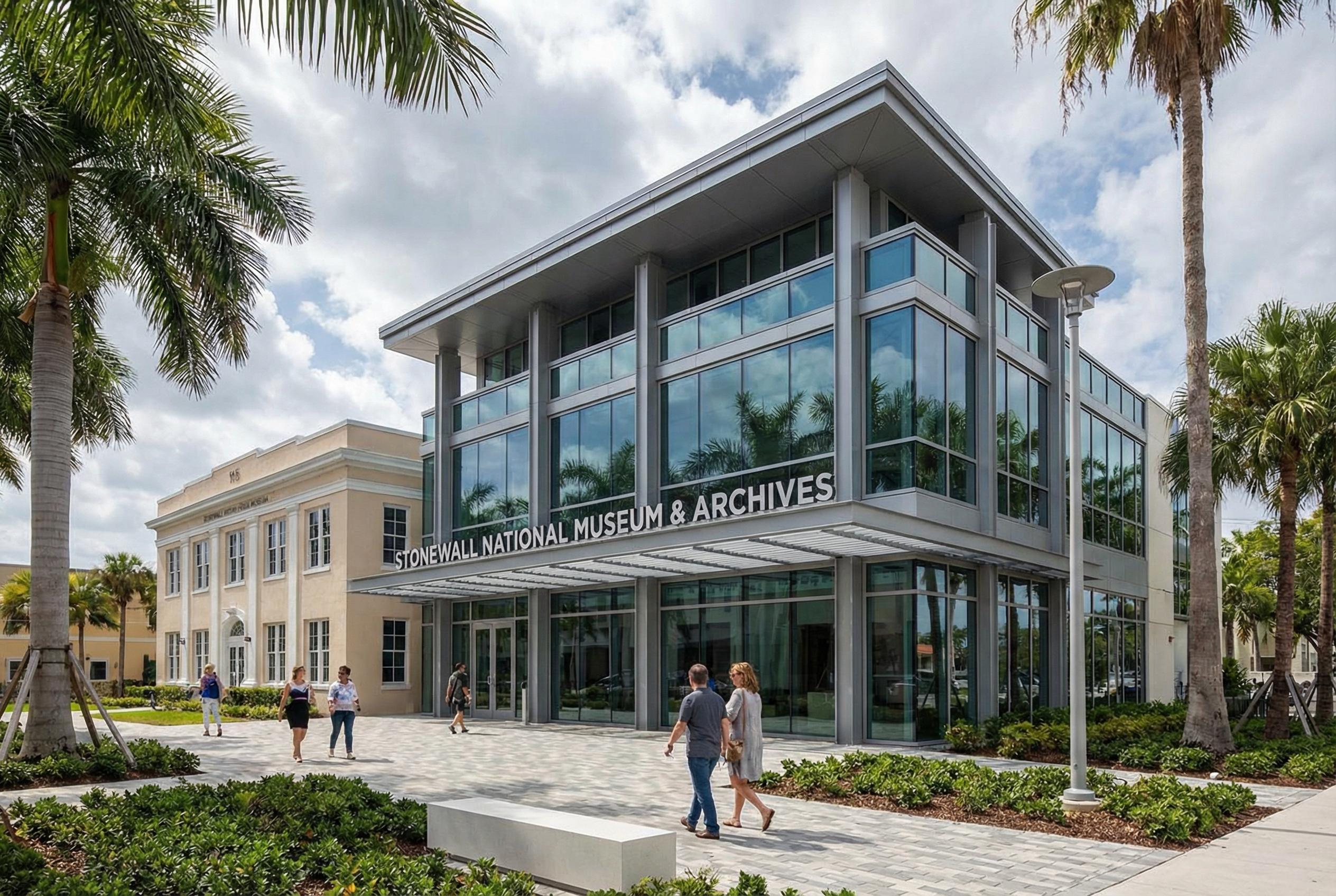
Shoppers of history and culture are rallying behind Stonewall’s $40 million expansion , a bid to turn a cramped Fort Lauderdale archive into America’s first true national LGBTQ+ museum, and to lock visibility into a permanent, touchable place where young people can finally see themselves.
Essential Takeaways
- Big jump in size: The Stonewall National Museum is planning to expand from roughly 4,500 to 40,000 square feet, vastly increasing exhibition and archive space.
- Archival pressure: The institution already cares for millions of items and faces serious storage and preservation challenges; more space means objects can be safeguarded and displayed.
- Visibility as infrastructure: Advocates argue a physical museum gives durable representation that the internet alone can’t guarantee , it’s a record that can’t be deleted overnight.
- Community impact: Organisers say the expanded museum will be a place where LGBTQ+ youth, families and allies can feel seen and connect with a lineage of activists, artists and athletes.
- Practical wins: Expanded galleries, climate-controlled archives and educational programmes will support research, schools, and public events in South Florida and beyond.
A museum that feels like a home for stories, not a website
There’s a tangible hush that comes over people in a museum gallery, a sense that something permanent is being acknowledged, preserved and honoured. Stonewall’s drive to multiply its footprint by nearly tenfold aims to turn that hush into a chorus , places to walk, read, touch and learn. According to the museum’s own mission, the centre collects, preserves and promotes LGBTQ+ history; expanded space means more of those millions of items can be shown rather than stored in boxes. For anyone who remembers a childhood without mirrors, a physical gallery can be a revelation.
Why build when content lives online?
It’s a fair question. The internet is vast and immediate, but it’s also fragile and ephemeral. Museums offer climate-controlled storage, conservation expertise and a curated narrative that contextualises objects , a handwritten letter or a protest placard feels different under glass than as a JPEG. Stonewall’s leaders argue that representation is infrastructure, not decoration: a building anchors a community’s memory against political shifts and the shifting sands of platforms and servers. That permanence matters when rights and visibility ebb and flow.
From the football pitch to the gallery: visibility changes lives
First-person stories underline the case. Community leaders who’ve watched people discover themselves in sports say the same switch flips in a museum: suddenly a visitor knows they’ve always belonged. That kind of recognition can arrive at any age and often arrives late without public records or role models. Expanding Stonewall aims to capture those turning points , athletes, writers, campaigners and everyday lives , so visitors can see a continuous thread of queer presence through American history.
What the expansion would actually deliver
Think beyond pretty galleries. A successful capital campaign will fund climate-controlled archives, expanded educational programming, rotating exhibitions and community spaces for talks and performances. That’s crucial for preserving fragile textiles, paper records and ephemera of activist movements. Local outlets have covered recent grants and regional cultural investment in Fort Lauderdale; an enlarged Stonewall would position the city as a national hub for queer scholarship and tourism, bringing new audiences and deepening local cultural infrastructure.
How to decide if you should support the campaign
If you value durable representation, consider what a physical museum safeguards that a website can’t. Donors might prioritise conservation naming rights, educational endowments or sponsorship of travelling exhibits that reach schools. Volunteers and community fundraisers can help translate grassroots energy into public donations. For families and educators, a key measure is accessibility: programmes aimed at youth, sliding-scale admissions and partnerships with schools make a museum truly useful, not just symbolic.
It’s a small change that can make every story safer and more visible.
Source Reference Map
Story idea inspired by: [1]
Sources by paragraph: