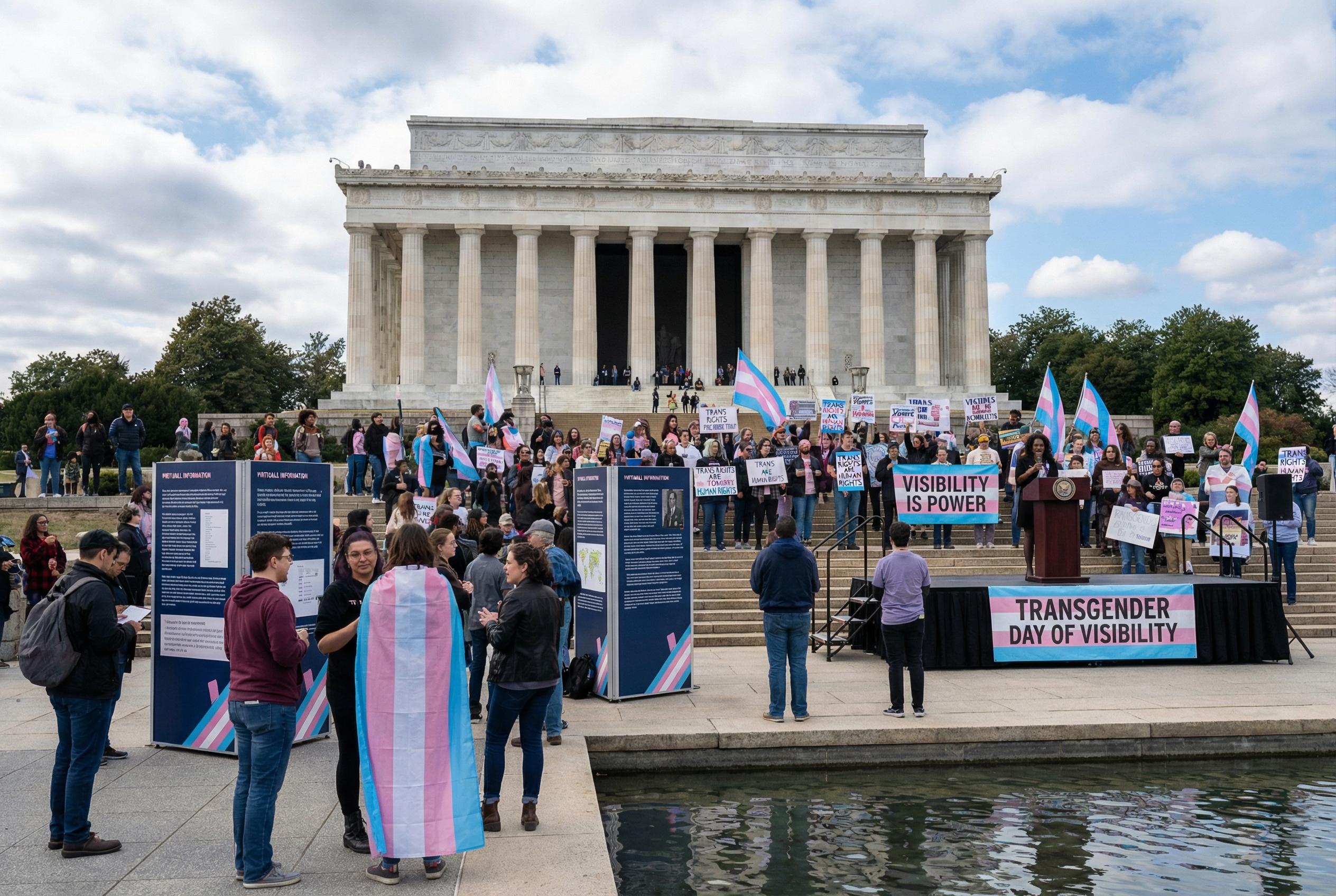
See the movement in motion: activists, allies and families gathered on the National Mall for a bigger, bolder Trans Day of Visibility , why the weekend mattered, who showed up, and what it signals for trans rights and civic organising ahead of tougher fights.
Essential Takeaways
- Large, visible turnout: Around 200 supporters and organisations gathered on the National Mall for multi-day programming and a high-profile rally, creating a lively, colourful scene.
- Broad participation: Speakers ranged from local organisers and parents to national performers and religious leaders, giving the event a human, cross-community tone.
- Strategic activism: The Christopher Street Project organised panels, workshops and more than 75 Hill meetings, stressing both visibility and legislative advocacy.
- Policy pressure remains: Despite rising familiarity with trans people, more than 80 anti-trans bills remain active in state legislatures, keeping the political stakes high.
- Emotion and urgency: Parents, veterans and artists shared stories that blended pride with frustration , an insistence on belonging alongside a demand for protections.
A bright, kite-strewn rally that felt both celebratory and urgent
The opening image was unmistakeable: rainbow kites snapped against a blue spring sky, a visual of joy and stubborn presence on the Mall. According to event organisers, roughly 200 people and dozens of groups gathered for a programme that had grown noticeably larger than last year, with a bigger stage and enhanced security. That scale-up mattered; it turned visibility into a public statement that this community is organised, visible and politically active.
Organisers said the three days of panels, workshops and Hill meetings weren’t just symbolic. The Christopher Street Project ran dozens of meetings with lawmakers and trained people who had never lobbied before, blending storytelling with policy asks. If you’re thinking of getting involved, this combination of public protest and private advocacy is worth copying , show up where decisions are made, then tell your story where voters can see it.
Who spoke , and why their voices changed the tone
Speakers ranged from Peppermint, the performer and activist, to Rabbi Abby Stein and parents of trans children, creating a mix of celebrity, faith-based reflection and raw family testimony. Military veterans who lost jobs or benefits also took the mic, reminding listeners that policy affects real livelihoods. That blend shifted the day from a single-issue rally to a broader civic plea: trans lives intersect with religion, service, parenting and art.
The line-up mattered because it countered the caricatures often deployed in political debates. When stories come from neighbours, parents and veterans, public sympathy grows , and organisers point to recent polling that shows Americans are more likely than before to know a trans person personally. For campaigners, that personal connection is the slow currency of change.
Visibility plus policy: organisers want both spectacle and strategy
This year’s TDoV wasn’t just theatrical. Organisers noted they ran over 75 Hill meetings and dozens of panels covering legal and community support topics. The practical aim was clear: visibility opens doors, but policy wins happen in corridors and hearings. That two-track approach , public mobilisation plus targeted lobbying , is now standard among advocacy groups trying to protect gender-affirming care and participation rights.
If you’re weighing how to support these efforts, small things help: attend local meetings, sign petitions that directly influence legislators, or join canvassing drives. The people who’d never been to the Hill until this event were precisely the sort of voters and witnesses advocacy groups want in future sessions.
The political pushback that underlines the urgency
Despite more Americans saying they personally know someone who is trans, more than 80 anti-trans bills are reported to be pending across state legislatures. Many target sports participation for trans youth and access to gender-affirming care, with some states adopting punitive enforcement measures. That legal pressure helps explain why organisers emphasised both public presence and legislative education.
Speakers at the rally framed these bills as part of a larger strategy to marginalise the community politically. That argument has traction: when a group is forced out of public life, history shows damage spreads. For voters and allies, understanding the legal landscape , and not just attending a march , is a practical next step.
The human moments that stuck with people in the crowd
Among the most powerful notes were small, human scenes: a parent who’d come to lobby for the first time on behalf of her children, elders receiving thanks and young people cheering as veterans shared their service stories. Those moments cut through the rhetoric and reminded the crowd why visibility matters beyond slogans.
Organisers closed by underlining a resilient, collective message: trans people will not disappear, and winning requires everybody , allies, families, elders and newcomers. If you left the Mall feeling both tired and galvanised, you weren’t alone; that mix of disappointment and hope ran through many speeches.
It's a small change in civic life that can make every day safer and more visible.
Source Reference Map
Story idea inspired by: [1]
Sources by paragraph: