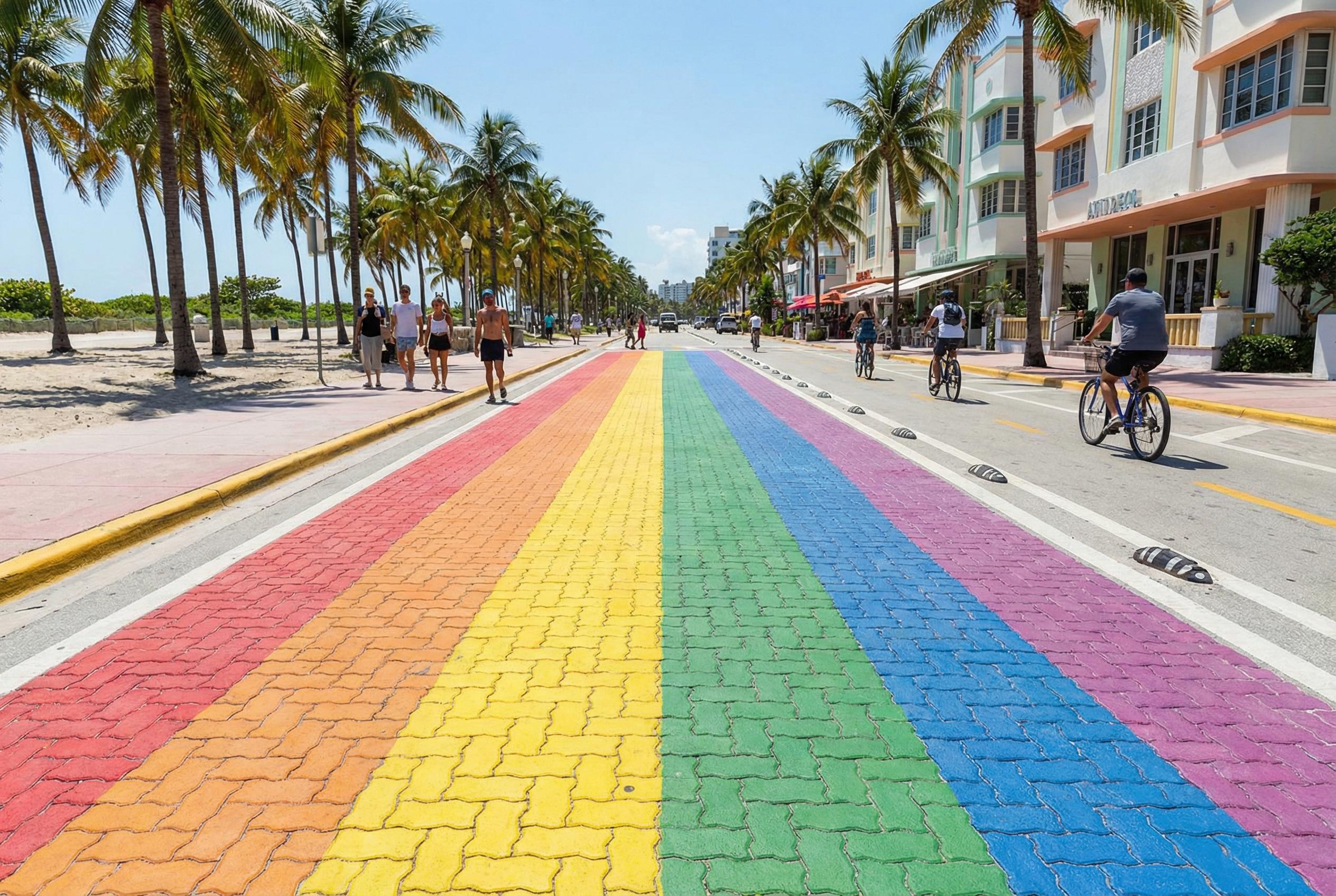
Shoppers and visitors are spotting a colourful comeback: Miami Beach has rebuilt its rainbow crosswalk as a permanent paver installation in Lummus Park, a visible rebuke to state removal and a celebration timed for this year’s Pride events. It matters because the city turned a short-lived street symbol into a lasting park tribute that honours community memory.
Essential Takeaways
- Permanent installation: The new rainbow is a brick-by-brick paver display in Lummus Park, designed to remain long-term and resist future removal.
- Reused materials: The project uses many of the original pavers alongside new ones, creating continuity with the removed crosswalk.
- Local funding: City commissioners allocated roughly $100–$120k from surplus funds to design, install and plaque the display.
- Community symbolism: The replica honours the LGBTQ+ community and will be unveiled to coincide with Miami Beach Pride celebrations.
- Accessible celebration: The installation and related Pride events include accessibility planning and public programming along Ocean Drive and Lincoln Road.
Why Miami Beach built the rainbow in a park , and why that matters
The most striking detail is the tactile, brick-by-brick nature of the new display; you can almost hear the clink of pavers as workers lay them down. Miami Beach elected to move the rainbow off the roadway itself after state crews removed the original rainbow crosswalk, choosing a park setting to protect the work from future transport rules. According to Local 10 News, officials expect the project to cost about $100,000, and the city commission tapped its year-end surplus to fund a lasting tribute. That move shifts the symbol from a temporary surface treatment to a piece of public art that’s harder to erase, both practically and politically.
How the replica honours history and keeps the message alive
The new installation is built from 3,606 colourful pavers, many of them the originals, arranged to recreate the iconic rainbow look that once crossed Ocean Drive at 12th Street. Savino Miller Design Studio led the design, and commissioners have approved a plaque to explain the work’s backstory. Residents told WLRN and other outlets the original crosswalk felt like a safe marker for LGBTQ+ visitors; rebuilding the rainbow in a park preserves that emotional anchor while sidestepping regulatory disputes over road markings.
Creative resistance: what other cities and businesses are doing
Miami Beach’s park solution fits a larger pattern. Cities and businesses across Florida have sidestepped restrictions by installing pride bike racks, painting private parking lots, or projecting rainbow lights, small, permanent or private changes that keep visibility intact without relying on roadway approvals. LGBTQ Nation and other outlets reported municipalities opting for durable, creative alternatives after state directives led to removals. These approaches show how local governments and owners are adapting, using design and location to protect expression.
Practical info: where to see it and what to expect at Pride
The unveiling is timed with Miami Beach’s 18th annual Pride, which includes a flag-raising ceremony at City Hall and a parade along Ocean Drive and Lincoln Road, according to Axios and the official Miami Beach Pride site. Expect benches donated by a commissioner, a new explanatory plaque, and programming that emphasises accessibility. If you’re planning a visit, pick quieter weekday morning slots to appreciate the colours and take photos without crowds, and check the Pride website for accessible route info and event times.
Politics, funding and a local coalition of allies
This installation didn’t happen in isolation; it followed a statewide directive that led to the removal of roughly 400 non-standard street artworks, many of them Pride-themed. Miami Beach commissioners and community members framed their decision as an act of solidarity. As CBS News and other local outlets noted, commissioners emphasised the role of allies in preserving visibility. The city’s willingness to spend surplus funds and add interpretive signage suggests officials want this to be both a memorial and a civic statement that outlasts headlines.
It's a small change that can make visible support feel built to last.
Source Reference Map
Story idea inspired by: [1]
Sources by paragraph: