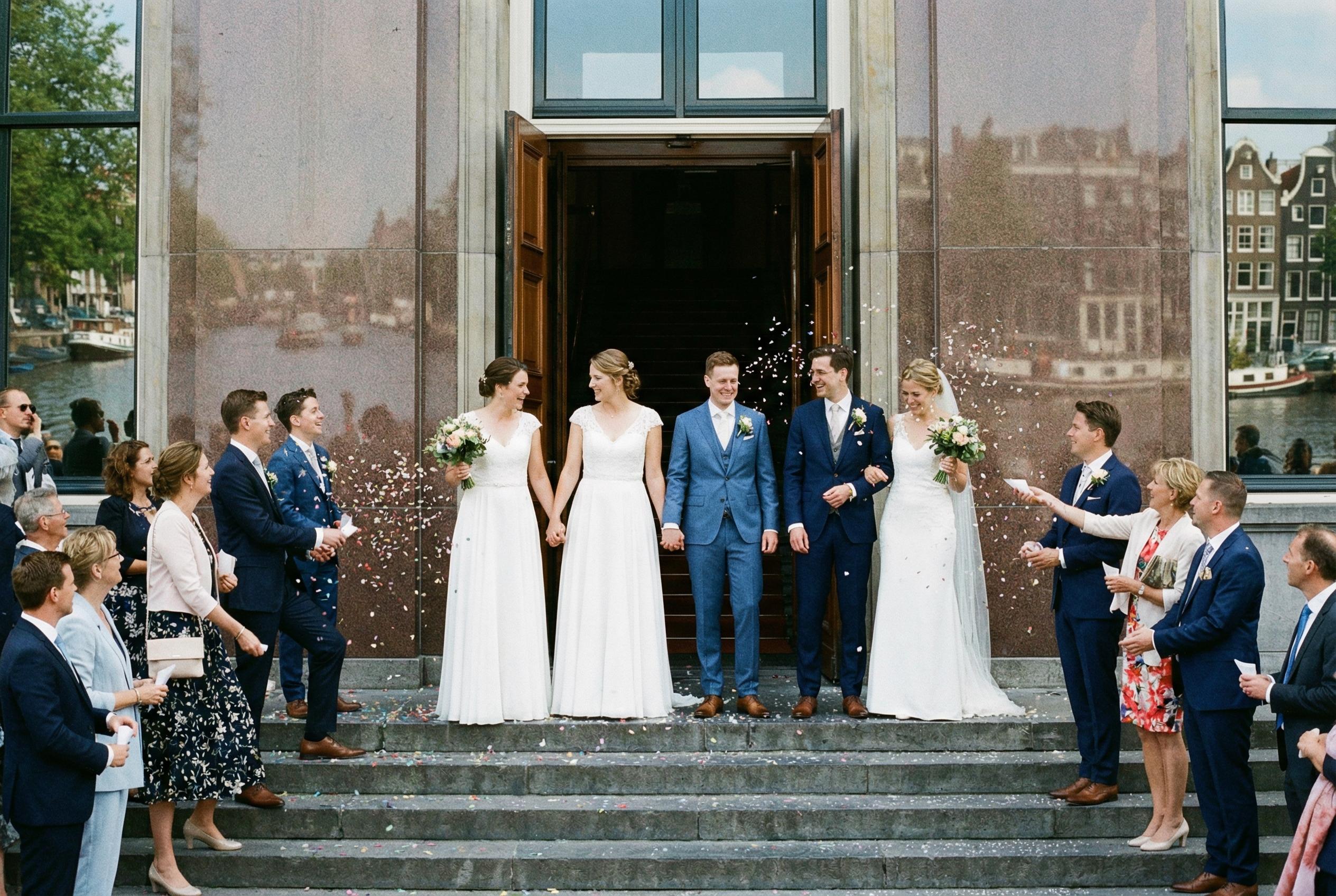
Celebrate with Amsterdam: residents and leaders marked 25 years since the Netherlands became the first country to legalise same-sex marriage, with three couples wed at City Hall and Prime Minister Rob Jetten among those reflecting on progress, pride and the work still to do.
Essential Takeaways
- Historic first: The Netherlands legalised same-sex marriage on 1 April 2001, the first country worldwide to do so.
- Thousands married: More than 36,000 same-sex marriages have taken place in the Netherlands since legalisation.
- Official celebrations: Amsterdam’s mayor officiated three weddings at City Hall to mark the 25th anniversary; the prime minister attended and spoke.
- Proud symbolism: Rob Jetten, the country’s first openly gay prime minister, recalled being inspired by those early ceremonies and plans his own wedding soon.
- Progress and protest: Events mixed celebration with reminders that LGBT+ rights still need defending and expanding globally.
A simple ceremony with a layered meaning
Early on 1 April, Amsterdam’s stately City Hall felt both ceremonial and intimate, as three couples took vows in front of friends and cameras. The air was likely crisp and a little electric , you could almost hear decades of change in the room. According to reports from local and international outlets, mayor Femke Halsema conducted the weddings while city officials and journalists looked on. For many, the ceremony was less about spectacle and more about a quiet, lived affirmation of rights that began 25 years ago.
Backstory matters here: the Netherlands’ move in 2001 set a legal and cultural benchmark that reverberated worldwide. Coverage notes that the first public weddings in Amsterdam were a revelation for many young people at the time, offering visibility and a new normal for same-sex relationships. That memory still resonates, and today’s simple ceremonies underline how marriage equality has become part of everyday life for couples across the country.
Rob Jetten’s personal and political nod
Seeing the prime minister at the anniversary gave the day extra poignancy. Rob Jetten, who is openly gay and due to marry his partner Nicolas Keenan, spoke about watching those early weddings as a teenager and how they inspired him. Media coverage highlights his comment that celebrating universal marriage as prime minister felt deeply meaningful. His presence is symbolically powerful: it ties a personal narrative to the state’s commitment, and it sends a message to young LGBT+ people that visibility can lead to representation at the highest levels.
That said, Jetten’s attendance wasn’t a victory lap so much as a marker of progress. Observers pointed out that political tides can shift, and being vocal about rights remains important , even in countries that led the way.
A quarter-century of influence and the numbers behind it
The figures tell a clear story: more than 36,000 same-sex marriages registered in the Netherlands since 2001. That isn’t just a statistic; it’s a catalogue of households, legal protections, children and shared lives that were recognised by the state. International outlets and Dutch news pages noted how many countries have since followed the Netherlands’ example, making marriage equality a mainstream human-rights cause rather than a radical experiment.
Still, the anniversary made room for nuance. Mayor Halsema and others framed the day as partly celebratory and partly a protest , a reminder that gains can be threatened and that legal recognition doesn’t erase discrimination. It’s a useful distinction: law creates rights, but culture, enforcement and access create lived equality.
Voices from the day: couples and civic leaders
Among the couples marrying on the anniversary were Eelke de Jong and Elton Dos Santos Fiame, who described their moment as deeply meaningful and exciting to be part of a milestone. Reports captured the mixture of joy and gravity , these weddings were at once personal commitments and public statements. Coverage across European and global press picked up on the emotional texture: quiet excitement, proud smiles, and the sense that this day stitched individual stories into a broader historical fabric.
Officials were clear that celebration didn’t preclude vigilance. Halsema openly reflected on recent conservative governments and the mixed trajectory of gay rights, urging continued attention. That balance , rejoicing while recognising unfinished business , was the day’s tone.
Why this anniversary still matters beyond the Netherlands
This isn’t simply a Dutch anniversary; it’s a global checkpoint. The Netherlands’ 2001 law was a blueprint that influenced legal debates, court cases and political conversations around the world. Reporting from international outlets places Amsterdam’s commemoration in a wider context: dozens of countries have since recognised same-sex marriage, while in others activists still fight for basic recognition.
If you’re thinking practically, anniversaries like this are a prompt to check what protections exist where you live , parental rights, inheritance, tax treatment and anti-discrimination laws can vary widely. For supporters, it’s a reminder to stay engaged: laws can be improved, and rights defended, through voting, advocacy and community work.
It's a small change that can make every marriage mean more.
Source Reference Map
Story idea inspired by: [1]
Sources by paragraph: