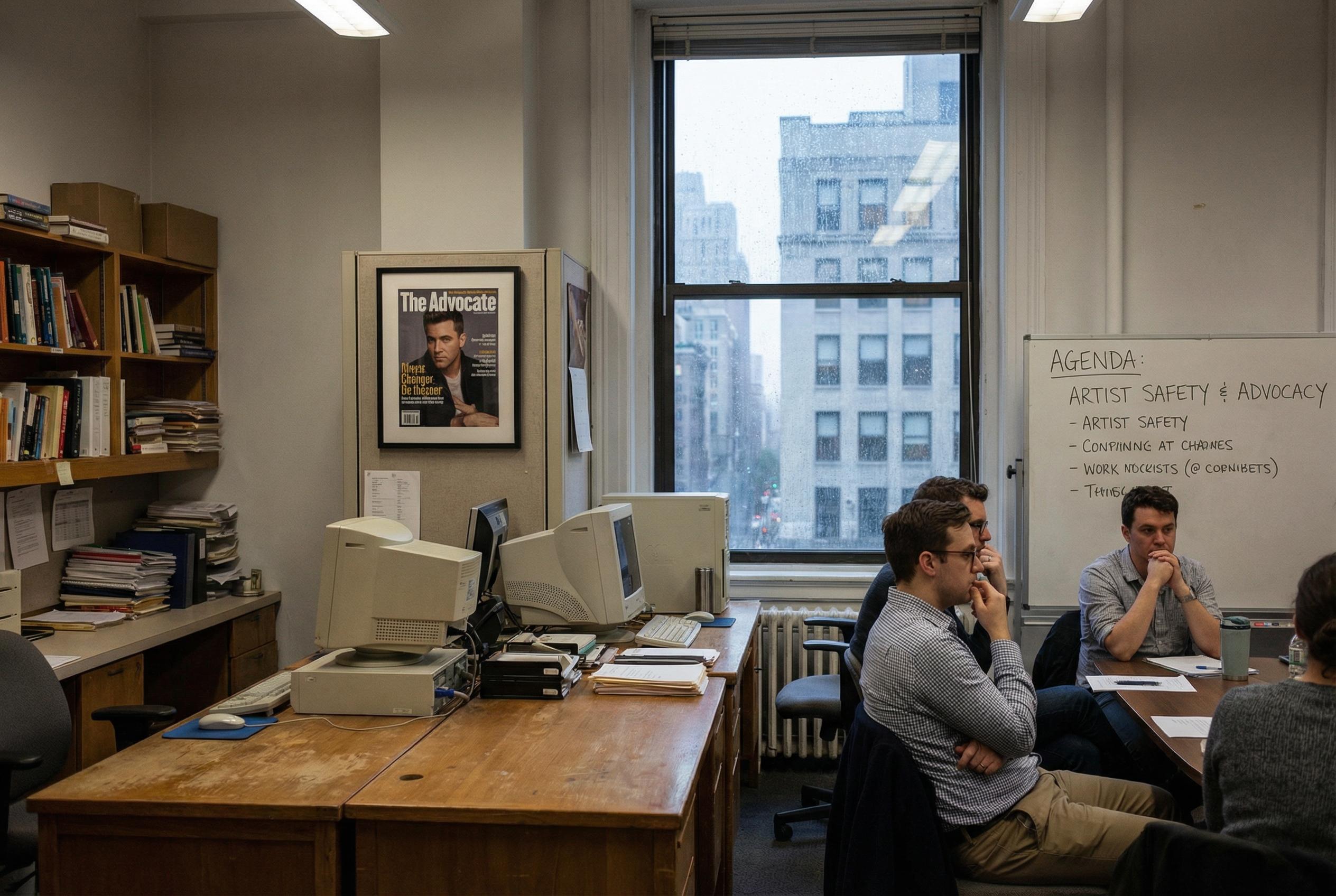
Spotlight voices are warning that being visible as a Black LGBTQ+ person in America has become a risky act of resistance, as entertainers and activists speak out about erasure, shrinking opportunities and political attacks that matter to culture, safety and livelihoods.
Essential Takeaways
- High-profile warnings: Leading queer entertainers say visibility itself is now a form of activism and risk.
- Institutional pressure: Cultural funding and programming face political attacks that threaten queer and Black artists’ platforms.
- Local solidarity matters: Cities and community groups are responding with symbols and gestures to protect inclusion.
- Media representation stakes: Coverage and portrayal of transgender women of colour shape public understanding and policy outcomes.
Why entertainers are framing visibility as activism
When well-known queer performers talk about simply showing up, they’re signalling that visibility carries weight and danger. Ts Madison told CNN that being recognisable as trans right now is an act of defiance, a plain, bracing observation that reads equal parts weary and resolute. Meanwhile, other artists have noted how opportunities that once felt hard-won are quietly evaporating.
This isn’t just celebrity grief. According to reporting and commentary across outlets, political moves targeting LGBTQ+ cultural funding and institutions directly affect how and where artists can work. For Black LGBTQ+ creators, who already face layered barriers, the loss of institutional support hits commercially and emotionally.
If you’re following arts coverage or supporting queer creators, watch who’s losing slots in festivals and what programming is being pulled. Local venues and patrons can often make the difference when national funding falters.
Political attacks on cultural institutions: what’s at stake
There’s been an uptick in rhetoric and policy that singles out LGBTQ+ arts for scrutiny and cuts. Coverage in national outlets has linked proposed defunding and public shaming campaigns to broader conservative efforts to reshape cultural narratives and gatekeep who gets seen.
When institutions scale back queer programming, the practical results are immediate: fewer commissions, fewer residencies, fewer chances for mid-career Black artists to graduate to larger stages. As Billy Porter has pointed out in interviews, opportunities can dry up slowly, a drip that’s easy to miss until the well is nearly gone.
If you care about cultural diversity, consider supporting membership schemes, crowdfunding campaigns and local initiatives that keep queer programming alive. Small donations and ticket purchases add up.
Visibility and safety: the specific risks for trans people of colour
Transgender women of colour have long been on the frontline of media misrepresentation and violence, and experts say current political climates can amplify those dangers. Scholarly and advocacy writing shows that representation , both its presence and its quality , affects public perceptions and, by extension, safety and policy.
Ts Madison’s comments reflect a broader pattern: when a public figure from a marginalised group is visible, they become a lightning rod for both support and vitriol. That spotlight can spur important conversations, but it can also attract coordinated attacks, from online harassment to legal restrictions that target schools, public spaces or healthcare access.
Practical steps for allies include amplifying accurate profiles and coverage, supporting grassroots safety networks, and pushing for local policies that protect trans youth and adults in schools and public facilities.
Local responses: rainbow walkways, flags and municipal gestures
Not all responses are national or legal. Cities and community councils have been using visible signs of solidarity , from flying transgender flags to painting rainbow crosswalks , as both celebration and rebuke. These gestures may seem symbolic, but they’re tangible commitments that help people feel seen in public spaces.
Officials in some towns have made a point of flying the transgender flag or officially recognising Pride projects, and those choices can set the tone for municipal services, school policies and policing priorities. If state or federal policy is hostile, local acts of inclusion become more than decoration; they’re first-line protections.
If you live in a place where local officials are friendly to inclusion, engage: attend flag-raisings, show up at council meetings, ask how symbolic actions tie to concrete policies like nondiscrimination enforcement.
What this means for culture and the future of queer storytelling
When funding, airtime and institutional goodwill are under pressure, the kinds of stories that reach audiences shift. That matters because narrative variety , especially from Black LGBTQ+ creators , reshapes empathy and policy over the long term. Several commentators have warned that shrinking cultural space risks narrowing the public imagination about who belongs.
Support comes in many forms: subscribing to independent queer outlets, buying work from Black LGBTQ+ creators, and sharing thoughtful profiles that give nuance rather than stereotype. The cultural ecosystem is porous; when mainstream doors close, the next big thing often grows from grassroots networks and digital platforms , if those networks receive support.
Expect more fights and more inventive responses. Artists and allies will continue to adapt, but public attention and everyday acts of support can tilt the balance.
It's a small change that can make every public act of visibility safer and more sustainable.
Source Reference Map
Story idea inspired by: [1]
Sources by paragraph: