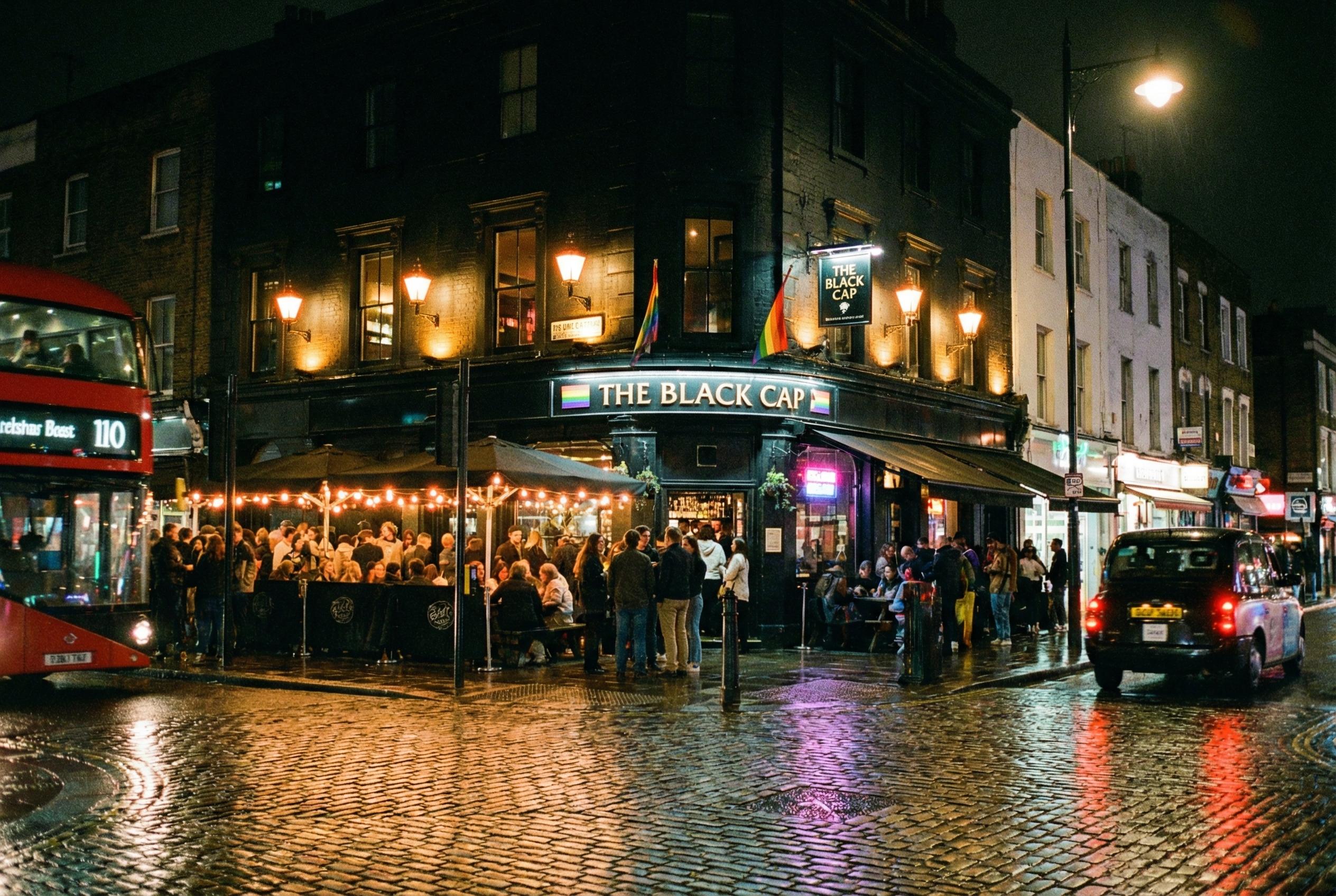
Packed with colour, sound and history, Camden’s beloved Black Cap has finally reopened , a restored, camp and community-backed cabaret venue that matters to locals and visitors alike, and a joyful reminder of why preserving queer spaces still counts.
Essential Takeaways
- Historic comeback: The Black Cap, a tavern site since the 1700s and a drag cabaret hub from the 1950s, has reopened after a decade-long closure and campaign to save it.
- Thoughtful restoration: New owners spent over £2.1m restoring period details, adding marble-topped bars, brass fixtures, murals and a state-of-the-art sound and lighting rig.
- Performance-led layout: Lily’s Bar downstairs keeps an intimate stage with banquette seating and theatrical touches; the upstairs Shufflewick Bar opens from noon and includes an outdoor terrace.
- Community wins: Campaigners secured the venue’s protection as an Asset of Community Value and ran weekly vigils for more than ten years , their input shaped the refurb.
- More than a pub: The venue now includes seven boutique bedrooms from about £200 a night and promises diverse booking and 36 new local jobs.
Opening hook: a landmark returns with sparkle There’s something delicious about seeing a neon-lit sign switch back on. The Black Cap’s reopening feels like that: loud, a little camp, and exactly what Camden needed. After sitting silent for more than a decade, the venue’s newly unveiled interiors , think marble-topped bars, brass fittings and classic drag portraiture , make it clear the rebuild was done with care and theatrical taste.
Backstory: how a community refused to lose a home The closure in 2015 landed like a punch for London’s queer scene; the building’s owners planned flats and that simply wasn’t acceptable to locals. A campaign sprang up and held weekly vigils outside the boarded-up doors for years. They also persuaded the council to list the building as an Asset of Community Value, a move that forced purchasers to face the venue’s past and, ultimately, helped stop its erasure.
What’s new , classic cabaret with modern tech Inside, Lily’s Bar is long and narrow with the stage still front and centre; seating runs along both sides so everyone feels close to the action. The refurb mixes nostalgia , murals honouring drag stars of old , with modern comforts: a professional sound and lighting set-up inspired by top Ibiza venues. The result is a place that looks like it has always been beautiful, and yet can hold a contemporary show without blinking.
Small theatrical touches that make visits memorable Fans have already clocked the extra little flourishes. One cubicle in Lily’s Bar is decked with mirrored mosaic tiles and houses an emergency red button that triggers a ten-second disco micro-show. Don’t be surprised if regulars christen features , the nickname “George Michael toilet” has already stuck, nodding to the star’s iconic Outside video.
Why this matters in the bigger picture This isn’t only about nostalgia. According to the new operators, the reopening creates 36 jobs and brings back a vital performance space for queer artists. Industry coverage and local reaction suggest the venue will quickly reclaim its role as a rehearsing, touring and community stage, not just a tourist curiosity. For anyone who cares about preserving cultural spaces, the Black Cap’s resurrection feels like one you can visit and enjoy.
Practical info for visitors The upstairs Shufflewick Bar opens from noon daily and the downstairs cabaret runs in the evenings, with a rotating roster of performers. There’s an outdoor Regina Fong Terrace set to be furnished for summer, and seven boutique rooms above the pub start from around £200 , worth noting if you’re travelling in for a night of shows and want to keep things simple.
Final thought It’s rare to see heritage, community campaigning and a dash of camp combine so happily; the Black Cap’s return is a reminder that places rooted in identity are worth fighting for.
Source Reference Map
Story idea inspired by: [1]
Sources by paragraph: