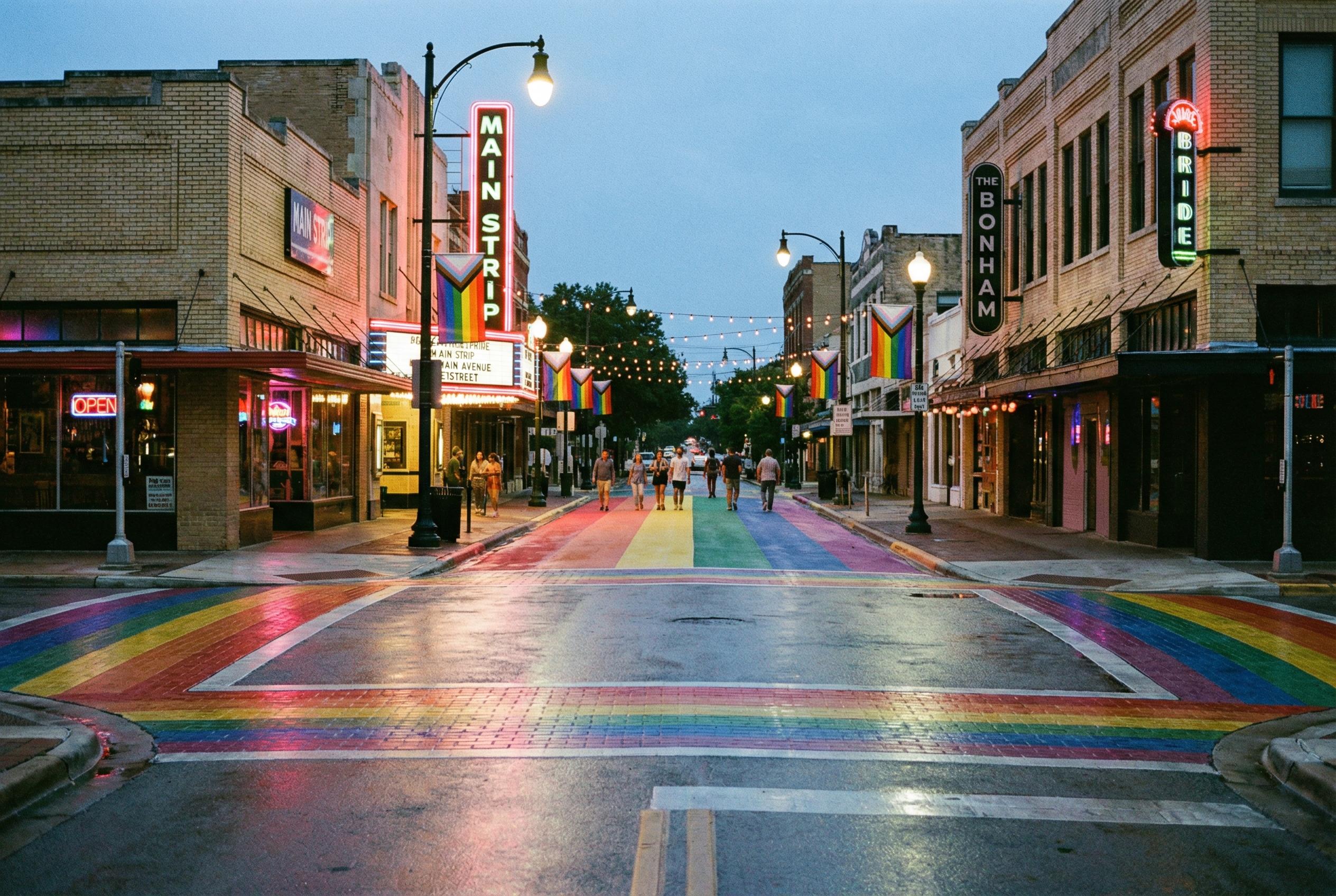
Shoppers and nightlife-goers noticed a splash of colour back on Main Avenue this weekend as San Antonio officials unveiled new rainbow sidewalks in the city’s Pride Cultural District, a visible show of support after state rules pushed rainbow crosswalks off the road. It’s a small but spirited gesture that keeps Pride artwork in public life.
Essential Takeaways
- Where: The painted sidewalks run one block north and one block south of North Main Avenue and Evergreen Street, in the heart of the city’s gay nightlife strip.
- Cost: The project cost about $170,000, funded from the Fiscal 2026 budget and city contract allocations approved in 2024 and 2025.
- Reason: The work responds to last year’s state directive limiting roadway art; sidewalks are generally city property and not governed by TxDOT rules.
- Leadership: The effort was led by District 1 Councilwoman Sukh Kaur, with other council members attending the ribbon-cutting.
- Feel: The new walkways restore a warm, community-facing visual that residents and visitors say makes the strip feel welcoming again.
A colourful comeback on Main Avenue
The rainbow pavement returned to the Pride Cultural District with a ribbon cutting that felt both festive and defiant, a bright, tactile welcome for evening crowds and daytime strollers alike. The original rainbow crosses had marked the intersection of North Main and Evergreen since 2018, and residents say the colour never failed to lift the mood.
According to local reports, the fresh sidewalks occupy the same lively strip where the crosswalks once stood, but on city-owned sidewalk space rather than state-controlled roadways. That distinction matters: city officials can decide what to do on pavements under their jurisdiction, so painting the sidewalks offered a legal route to keep Pride art visible.
Why the timing mattered , and how the state order changed things
Last October Governor Greg Abbott asked the Texas Department of Transportation to remove roadway art that he said “advances political agendas,” a move that led to the removal of several rainbow crosswalks across the state. San Antonio’s crosses were privately funded and maintained, yet they were taken down after the directive stirred legal and political uncertainty.
Councilwoman Sukh Kaur framed the sidewalk project as a practical response: “We might have had to do what the state wants on their property. But we’re doing what we want on our property,” she told KSAT at the opening. The message was simple , if roads are off limits, the city can still celebrate community on the paths people actually use.
Money, contracts and the practical side of public art
The city spent roughly $170,000 on the sidewalks, pulling dollars from the Fiscal 2026 budget and task-order contracts approved by the City Council in 2024 and 2025. That’s not pocket change for municipal paint, but officials argue it’s a worthwhile investment in local identity and safe, welcoming public space.
If you’re curious about costs elsewhere, this is a reminder that public art often involves permits, preparation, durable materials and ongoing maintenance. For communities considering similar projects, it helps to budget for anti-slip coatings and seasonal touch-ups so the colours stay vivid and the surface stays safe.
What residents and businesses are saying
Locals reacted with relief and a touch of pride when the new sidewalks appeared. Business owners along the strip welcomed the return of a visual marker that signals a community hub , an important cue for nightlife districts where atmosphere is part of the draw.
The new installation also shows how local leaders can navigate state-level constraints without giving up symbolic gestures. It’s a quiet example of civic creativity: when the road is blocked, make the pavement sing.
What’s next for Pride public art in San Antonio?
Council members have said they’re looking at other ways to support Pride-oriented art along Main Strip now that roadway decoration is off the table. Expect ideas that lean into murals, lighting, banners and permanent fixtures that don’t rely on state-controlled lanes.
For residents wanting to support future projects, attend community meetings, follow council updates and tip in for maintenance funds if private partnerships are invited. Small contributions and civic engagement often help keep local colour alive.
It’s a small change that can make every walk along Main Avenue a little brighter.
Source Reference Map
Story idea inspired by: [1]
Sources by paragraph: