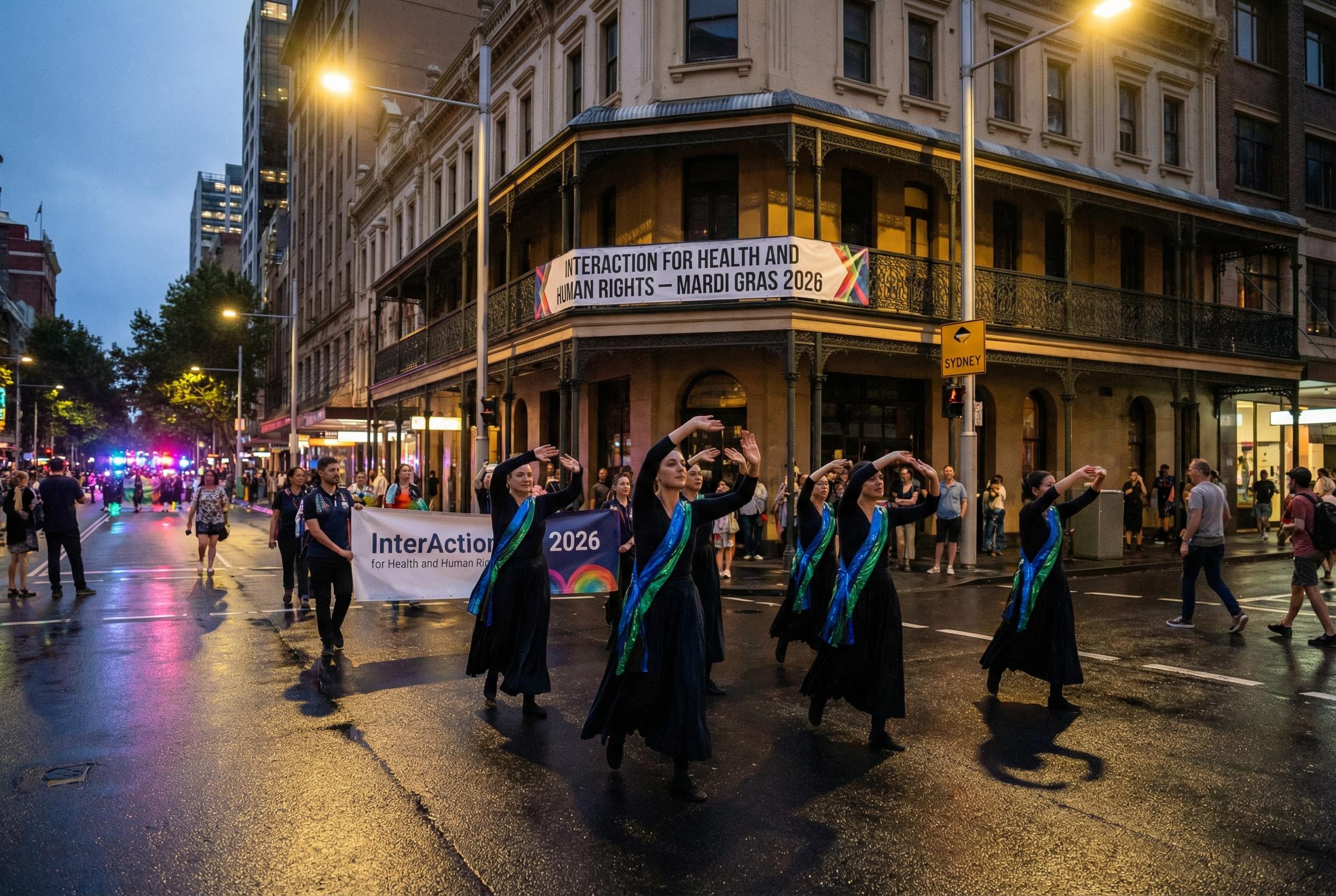
Shoppers, onlookers and revellers watched as InterAction for Health and Human Rights made a splash at the 2026 Sydney Gay and Lesbian Mardi Gras, bringing an intersex‑led, joyful “Ecsta‑sea” performance down Oxford Street, a vivid, visible push for bodily autonomy and broader legislative change.
Essential Takeaways
- First Mardi Gras march: InterAction made its debut parade appearance in 2026, joining other community groups and allies.
- Bold theme execution: The group leaned into the festival’s ECSTATICA motif with wave‑like choreography, light blue caps and shimmering blue‑silver ribbons.
- Clear advocacy message: Signs thanked ACT and Victoria for reforms and urged other states to follow, pairing celebration with policy aims.
- Community effort: Volunteers organised choreography, travel and photography, creating an accessible, emotionally resonant float.
- Sensory scene: The procession felt bright, rhythmic and communal, with the crowd responding to colour, song and movement.
A joyous debut that looked and felt like a festival high‑tide
InterAction’s arrival on Oxford Street read like a theatrical ocean: blue caps, purple tees and trailing ribbons that caught the parade lights. It wasn’t just decoration, each costume element amplified a single idea, that intersex people belong in the centre of queer celebration. According to the official Mardi Gras programme, the parade is a place where community stories meet big audiences, and InterAction used that platform to make a gentle but unmistakable splash.
From manifesto to movement: why the message mattered
The group framed its presence as invitation and demand, “Swim in Ecsta‑sea”, calling for bodily autonomy and consent around medical interventions. That mix of joy and policy is familiar in Mardi Gras culture, where celebration often doubles as protest. Observers told organisers the choreography and handheld signs struck the right balance between party energy and a serious ask: recognise intersex rights, as ACT and Victoria have started to do.
How community organising turned vision into choreography
Behind the dancing was practical work: volunteer organisers, choreographers who made movements inclusive, and a logistics team who ferried participants by road, rail and air. Making choreography accessible matters, for those who march and for spectators who want to join in, and InterAction’s leaders prioritised movement that felt celebratory without excluding anyone. The result was a float that looked polished, felt warm and allowed everyone to participate.
The wider context: Mardi Gras as a platform for visibility
Mardi Gras has always been both a festival and a forum, and 2026’s ECSTATICA programming encouraged creative expressions of joy across the parade and events calendar. Parade organisers say the event draws huge crowds each year and serves as one of the most visible moments for LGBTQIA+ advocacy in Australia. InterAction’s debut slots into that tradition, adding intersex stories to the conversation as Mardi Gras counts down to its 50th anniversary.
Practical takeaways if you want to join next time
If you’re thinking of marching with a community group, start early: rehearsals, costume planning and travel logistics get booked fast. Look for teams that offer accessible choreography and clear messaging, and lean into small touches, flags, wristbands, banners, that make your cause legible in a moving, noisy crowd. And if you’re a spectator, bring a camera, sun protection and curiosity, your applause matters.
It’s a small change that can make every wave count.
Source Reference Map
Story idea inspired by: [1]
Sources by paragraph: