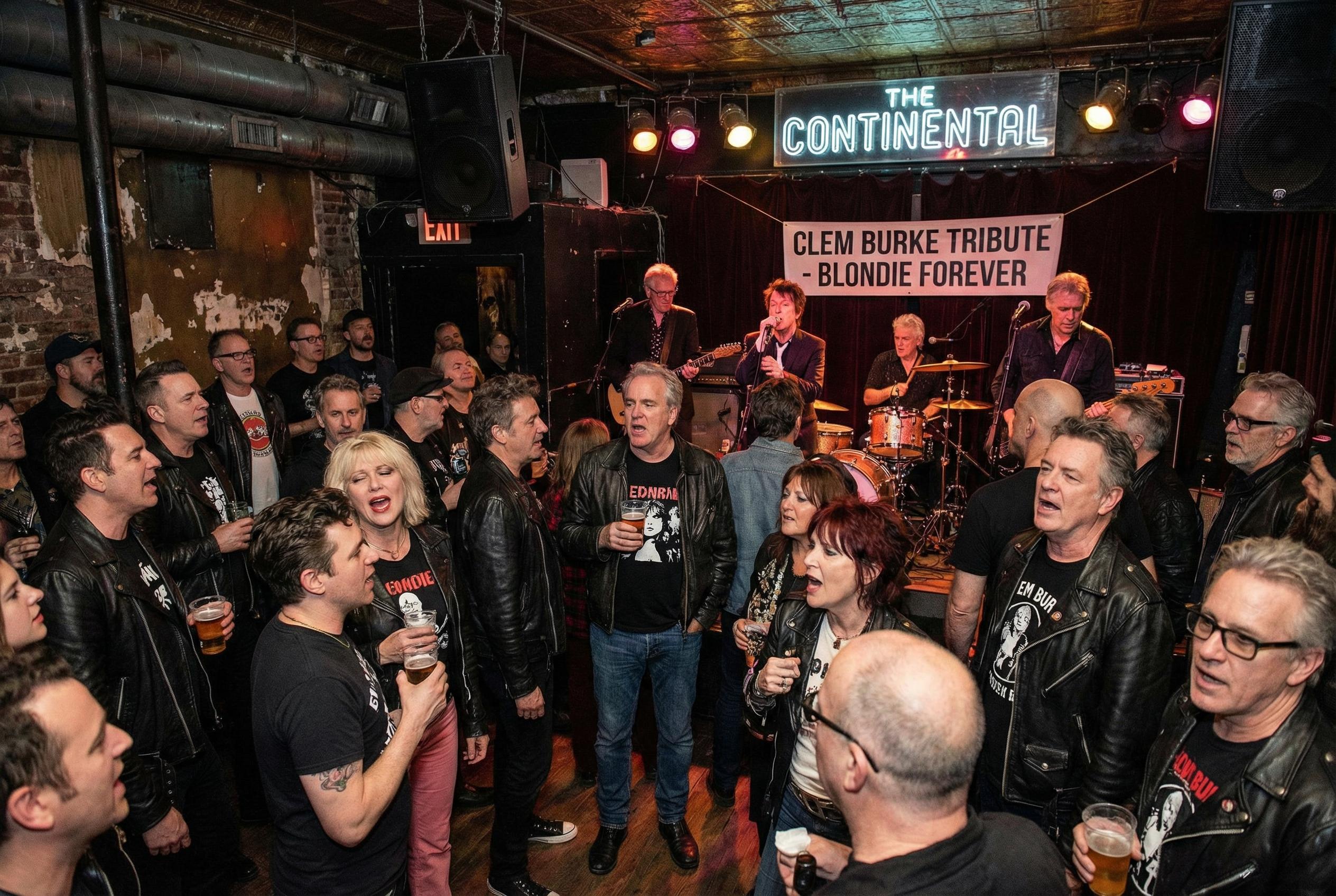
A crowd gathered in Manhattan's East Village this month to honour Clem Burke, the Blondie drummer who died in April 2025 at the age of 70 after a fight with cancer. Friends, fellow musicians and fans filled a small venue near Union Square for an evening of music and remembrances that underscored Burke's reach beyond the band that made him famous.
Performances centred on songs closely identified with Burke, including renditions of "Poet's Problem" and "Union City Blue," delivered with the urgency and technical flair that had become his trademark. Among those onstage were Kathy Valentine, Jesse Malin and Tommy Stinson, who each spoke or played in tribute to a musician colleagues described as restless, exacting and deeply committed to his craft.
According to The Guardian, Debbie Harry and Chris Stein called Burke the "heartbeat of Blondie," a phrase echoed by others at the event as they recalled his driving rhythms and flamboyant presence behind the kit. Parade magazine reported messages from musicians who emphasised both his technical gifts and the warmth of his friendships; Kathy Valentine, who was Burke's partner, was prominent in those tributes.
Organisers and attendees placed the evening in a broader local tradition of commemorating artists who defined the neighbourhood's cultural life. Bedford + Bowery's coverage of past East Village homages to punk figures was cited by several speakers as a reminder that the area has long been a site for celebrating the very voices Burke helped to amplify. The mood at the tribute alternated between celebration and sorrow, with laughter at old tour stories and long silences when the drums fell away.
Burke's death prompted an outpouring of public recognition. Blondie shared images and messages on what would have been his 71st birthday, recalling him again as the band's "heartbeat," and noting he had recorded with them on the album High Noon before he died, according to local music outlets. Those details coloured the evening's setlist and conversation, as performers and friends highlighted that the recorded work was among his final statements.
Speakers also traced Burke's influence across genres and generations. Journalists and musicians pointed to his collaborations with other artists and his ability to shift between punk power and pop precision as reasons he was so widely admired. Jesse Malin and Tommy Stinson, each with long histories in New York rock, spoke of Burke's generosity in the studio and onstage, and the way his timing could lift a song.
For many in the room the tribute felt personal as much as public. Longtime fans described following Burke from small downtown clubs to arena shows; younger players said seeing him play taught them how vital a drummer's imagination could be to a band's identity. Jake learns that for queer and straight audiences alike, Burke's music provided a kind of communal pulse, songs that threaded nightlife, rebellion and intimacy together without ceremony.
As the night wound down, the performers returned for one last number, closing a gathering that framed Burke not simply as a skilled technician but as a connector, someone whose presence shaped performances, friendships and a neighbourhood's ongoing story about what it means to remember a creative life.
Source: Noah Wire Services