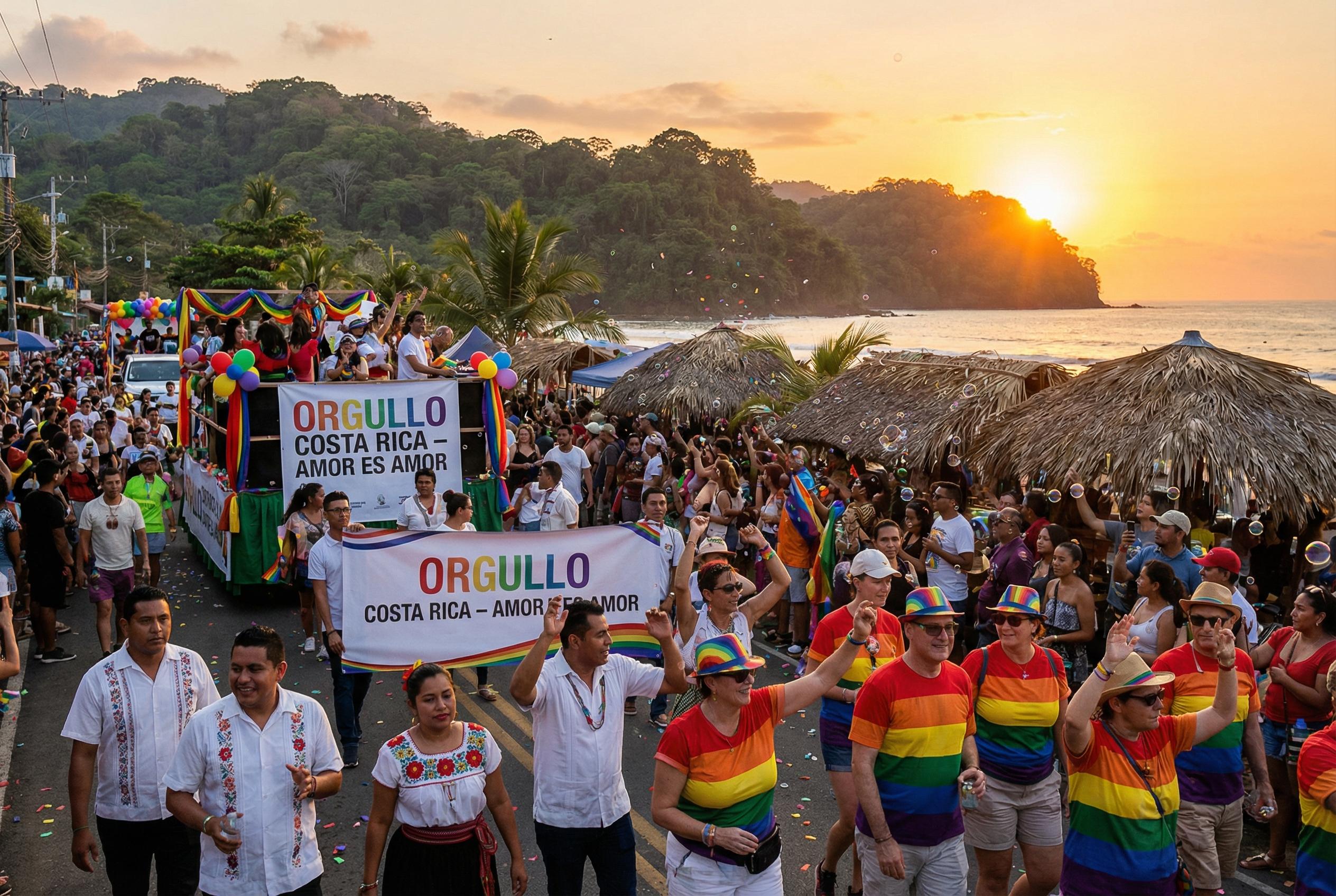
Costa Rica’s verdant hills and shimmering Pacific shores are hardly a secret to travellers, but the country’s position as a regional leader for LGBTQ+ rights often comes as a welcome surprise. Over the past decade the nation has moved from progressive rhetoric to concrete legal change, and that evolution is visible in the cities, the coastlines and the communities now confident enough to celebrate openly.
The turning point came in May 2020, when the Supreme Court ruled that the ban on same‑sex marriage was unconstitutional, setting in motion the first legally recognised same‑sex marriages in Central America. According to Human Rights Watch and contemporaneous reporting by Al Jazeera and Time, the ruling took effect after the legislature did not revise the law within the court’s allotted period, allowing same‑sex couples to marry. Media accounts of the first ceremonies name different couples; Human Rights Watch and several outlets mention Alexandra Quiros and Dunia Araya as among the earliest to wed, while other reports identify Daritza Araya and Alexandra Quiros. The variation in initial reporting reflects the private, pandemic‑constrained nature of those early ceremonies, but does not dilute the statute’s wider significance. Speaking in February 2026, former vice‑president Ana Helena Chacón , who led Costa Rica’s request for an advisory opinion from the Inter‑American Court of Human Rights that paved the way for marriage equality , described the change as “relief for an open wound”, noting that legal inclusion has strengthened families and democratic life despite political opposition. El País reported her reflections on the eighth anniversary of that regional ruling.
San José wears its welcome with a cultural confidence that makes it easy to move from legal milestones to everyday life. The capital’s nightlife and arts scene provide visible spaces for Queer expression: longstanding venues host drag and performance nights, galleries platform LGBTQ+ artists, and civic organisations continue to work on education, advocacy and social support. The city’s Pride parade draws crowds from across the region, transforming central boulevards into a vivid display of solidarity and celebration. Industry and travel guides published in 2026 continue to single out San José as the nation’s cultural hub for Queer life, citing queer‑owned cafés, grassroots groups and a nightlife that mixes historic venues with new, community‑led spaces.
Beyond the capital, coastal towns and surf villages have become magnets for LGBTQ+ travellers seeking sun, community and discretion in equal measure. Manuel Antonio on the Pacific coast is frequently identified as Costa Rica’s de facto gay beach town, with Playa Espadilla and Playa Biesanz singled out for their relaxed atmosphere and welcoming bars and resorts. Tamarindo, Nosara and Puerto Viejo also feature in recent travel coverage as inclusive destinations, each offering distinct flavours , from surf culture and wellness retreats to Afro‑Caribbean influences , that draw a diverse queer clientele. A 2026 travel guide summarises the trend: these towns are not only tourist havens but places where local life and Queer visitors mix without the need for spectacle.
For visitors seeking a blend of comfort and cultural immersion, properties such as the Marriott Hotel Hacienda Belén offer a quietly luxurious base close to San José. Set on a former coffee estate in the Central Valley, the hotel pairs Spanish‑colonial architecture with amenities that foreground Costa Rican craft and cuisine: coffee tastings, cooking and art workshops, and wellness programmes rooted in local traditions. Reviews and travel reporting praise the property’s ability to feel both historically grounded and hospitable, making it suitable for couples, groups and solo travellers who want an accessible gateway to city museums, markets and nearby cloud forest excursions.
Legal recognition has not ended the work of activists or the need for vigilance. Government measures in recent years have extended anti‑discrimination protections and advanced trans rights, but commentators and civil society groups stress that legal change must be matched by social and institutional reforms. Advocacy organisations continue to press for comprehensive education, health access and enforcement of anti‑discrimination rules so that legal equality translates into everyday safety and dignity.
For many Queer visitors, Costa Rica’s “pura vida” ethos , a national shorthand for relaxed optimism and communal respect , is not merely a tourism slogan but an observable attitude. Locals, tourism operators and community groups often treat LGBTQ+ travellers as part of the broader rhythm of life rather than as spectacles, a point that travel writers and guides have repeatedly noted. Jake learns that for those looking to combine natural beauty with a sense of social openness, Costa Rica now offers both in ways that many other countries in the region do not.
The country’s progress is a reminder that legal victories are both milestone and hinge: they open space for celebration and create new responsibilities for governments, businesses and civil society to protect and deepen equality. From the city streets of San José to the quiet coves of Manuel Antonio, Costa Rica today stands as a case study in how political change, cultural life and tourism can intersect to produce a broadly welcoming environment for LGBTQ+ people , while also underlining that the work to make that welcome universal continues.
Source: Noah Wire Services