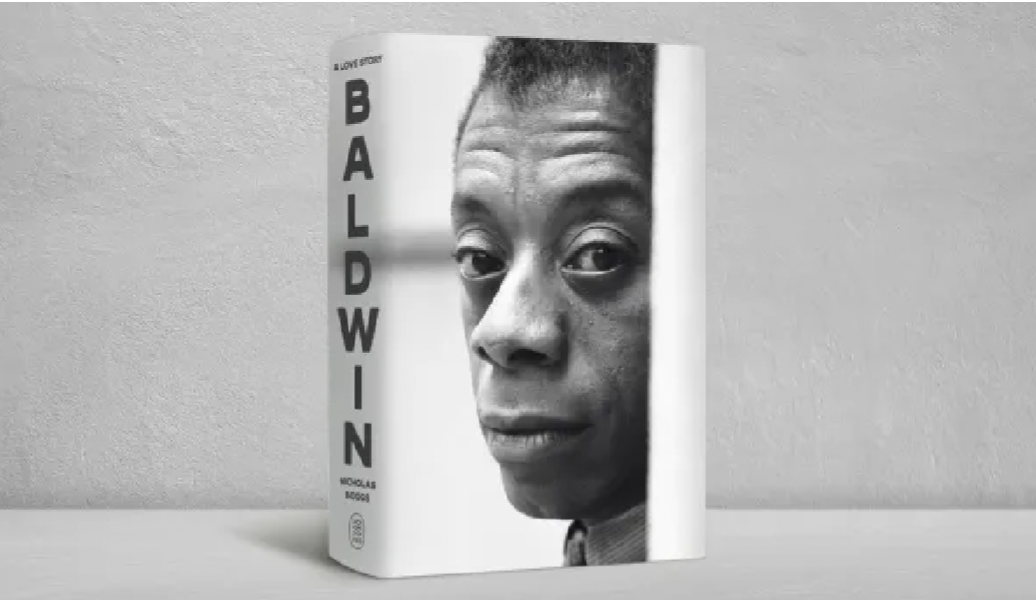
Nicholas Boggs’s Baldwin: A Love Story reinvigorates the study of James Baldwin by centring the emotional currents that powered his public voice as much as his prose. At more than 700 pages, the biography is expansive by design, tracing Baldwin’s trajectory from Harlem to Paris, Istanbul and the small towns in between, and arguing that his work can be read as a sustained engagement with yearning, belonging and the costs of being seen.
Boggs stitches Baldwin’s finished fiction and essays to letters, drafts and archival fragments, animating the ways intimate relationships shaped Baldwin’s imagination. According to the publisher Macmillan, the book draws particularly on Baldwin’s connections with Beauford Delaney, Lucien Happersberger, Engin Cezzar and Yoran Cazac, and Boggs uses those relationships to show how love, romantic, platonic and civic, moved through Baldwin’s pages as insistently as politics or aesthetics. The result is less a conventional life-and-times chronicle than a study of how a writer’s inner life refracts public witness.
Gray MacDonald, writing in Policy Magazine, praises the book’s willingness to let Baldwin speak for himself wherever possible and to reserve authorial intervention for moments where new archival material fills lacunae. That strategy yields passages that read like a Baldwin compilation: lines lifted from essays, diary entries and correspondence accumulate until biography becomes a chorus of voices in Baldwin’s timbre. Boggs’s prose is attentive to nuance; MacDonald notes, for example, an evocative description of Baldwin’s Istanbul years as 'soaking in the uniquely contradictory inspiration provided by the city’s haze of historical gloom and seaside hopefulness.'
The biography foregrounds a recurring paradox in Baldwin’s life, the simultaneous need for intimacy and for distance. Baldwin’s predilection for expatriation is well known, and Boggs positions that choice as pragmatic and existential: a means to write, to breathe and to survive, but never a full escape from the racial and social constraints he continued to interrogate. 'I love America more than any other country in the world,' Baldwin wrote, 'and, exactly for this reason, I insist on the right to criticize her perpetually.' Boggs traces how that insistence animated Baldwin’s visits to the American South during the Civil Rights era and how his critiques of methods and leadership were inseparable from his fierce attachment to the country.
Critical responses underline the scale and ambition of Boggs’s research. The Los Angeles Times called the biography a thorough and engaging reappraisal of Baldwin’s emotional life, while The Boston Globe highlighted the book’s insistence that love is not a sidebar but a central organising principle of Baldwin’s work. In an interview with The Washington Post, Boggs described his archival work and the interviews that allowed him to reconstruct Baldwin’s intimacies without collapsing them into gossip. American University, where Boggs has been affiliated, notes the book’s reception in academic and literary circles and records its recognition as a finalist for the 2025 Kirkus Prize.
Boggs’s project is also reflexive about readership. As a gay white man who credits Baldwin’s Giovanni’s Room with part of his own coming out, he acknowledges the personal stake in telling this story. MacDonald observes that this confessional element functions as a kind of tribute rather than a claim to proprietorship; Boggs foregrounds Baldwin’s voice and, where necessary, reads from it to make sense of Baldwin’s obsessions and contradictions. The biography’s republication and editorial attention to Little Man Little Man, Baldwin’s children’s book illustrated by Yoran Cazac, exemplifies Boggs’s tendency to treat Baldwin’s lesser-known work as crucial evidence of his commitments to narrative, memory and community.
Boggs does not sanitise Baldwin’s difficulties with belonging or his fraught relationships; rather, he argues that those tensions are integral to Baldwin’s authority as a witness. The book repeatedly shows how even the privileges of expatriate life, recognition overseas, access to different cultural circles, offered only partial insulation from racism and the psychic labour it demands. Boggs’s account returns insistently to Baldwin’s early years in Harlem, to the pressures to conform to “straight hair and white skin” standards of beauty that Baldwin himself said he “ached” to overcome, and to how those pressures informed his lifelong interrogation of value and desire.
For readers interested in Baldwin’s politics, Boggs makes clear that his essays and public interventions were never simply political dispatches; they were also philosophical meditations rooted in personal longing. His fiction and nonfiction are presented as reciprocal: reportage and polemic appear to feed his novels, while the moral urgency of his fiction sharpened his public arguments. Industry and journalistic coverage of the book underline its contribution to Baldwin studies by bringing fresh documentary material and by insisting that questions of love and attachment are indispensable to any serious appraisal of Baldwin’s legacy.
Baldwin: A Love Story thus positions itself as a corrective to biographies that either domesticate Baldwin into a single identity or reduce his interior life to emblematic evidence. Instead Boggs treats love, its failures and its illuminations, as Baldwin’s deepest analytic. That emphasis reframes Baldwin not simply as an icon of race or sexuality but as an ethicist of recognition: a writer who wrestled with what it means to be seen, and to see, in a society that polices both visibility and worth.
The biography will likely join the growing body of work that keeps Baldwin’s voice in circulation for new generations. As MacDonald puts it, the archival impulses that Boggs mobilises are a reminder that 'on paper is the best way for me to put a certain record which hopefully will be of some value to somebody, someday,' and that for Baldwin,'“it is now someday; and you are somebody.' In that sense Boggs’s book reads as a testament: not only to Baldwin’s literary importance, but to the persistent moral urgency of loving well in perilous times.
Source: Noah Wire Services